Just last week, when I visited my local clinic, most people there were waiting for their flu shots or COVID-19 boosters. But with the gloomy weather dragging on, I’m now hearing about the flu everywhere I go. It looks like Korea has entered full-blown flu season.
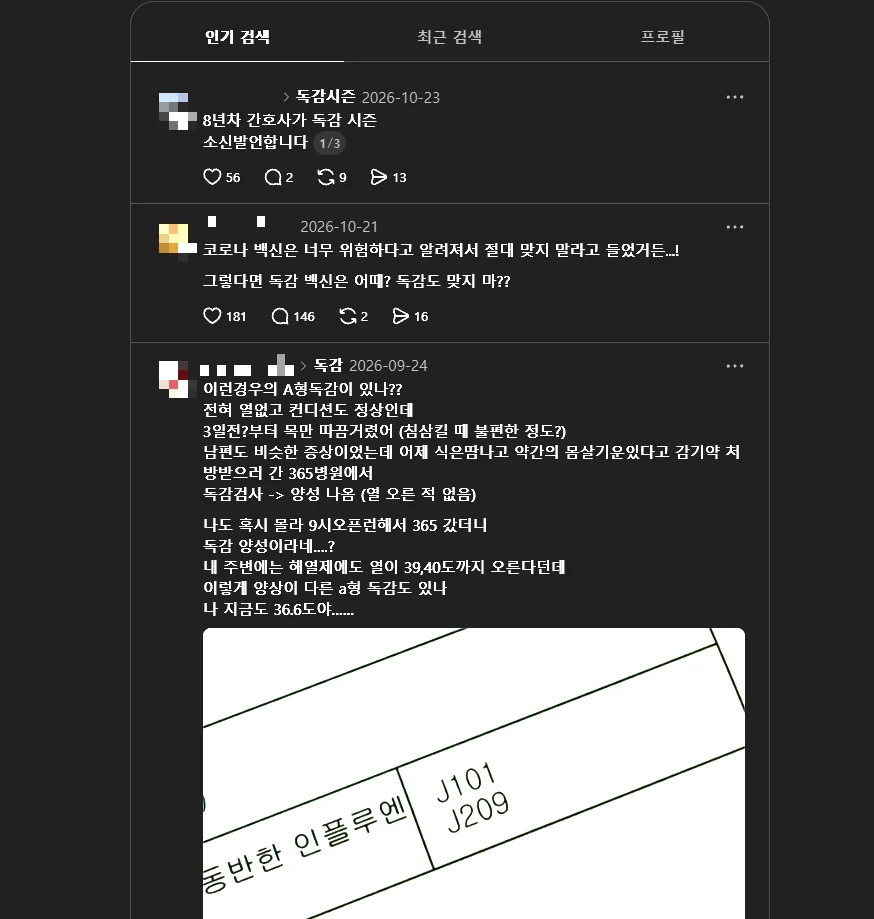
On Naver Cafe communities and on Threads, two places Koreans use a lot, flu posts have started pouring in. People are sharing their symptoms, and many are also wondering whether they should get a flu shot this year. In my experience, once ordinary people start talking about the flu, that’s when the real flu season begins.
Tips for Staying Healthy While Traveling in Korea
Wear a mask
When you visit crowded places, it’s a good idea to wear a mask. I know people in some countries aren’t fond of masks, but in Korea nobody will look at you strangely for wearing one. If anything, people tend to see it as a sign that you take good care of yourself.
You can easily buy masks at convenience stores, but they’re a bit pricier there, so try a pharmacy (약국, yakguk) instead. Korean masks are rated KF80, KF94, and KF99, and the higher the number, the better the filtration. KF94 is the most common high-performance mask for everyday use. If it feels too stuffy, KF80 is a good alternative. There are also thinner, more breathable KF-AD (droplet-blocking) masks, but keep in mind their filtration is lower than KF80. I recommend buying several and changing your mask a few times a day.
Wash your hands often
The most basic and effective protection is washing your hands with soap for at least 20 seconds. For times when you can’t wash up, carry a small bottle of hand sanitizer, available at any convenience store or pharmacy. Especially when you get back to your hotel after a day out, wash your hands first thing.
If you catch the flu
Let me share my own story first. The last time I had the flu, I thought “it’ll pass in a day or two” and didn’t go to the doctor. I ended up stuck in bed for three days, unable to get up. I still regret not going to the clinic right away. If you’re traveling, that’s all the more reason not to tough it out.
The typical flu symptoms are a sudden high fever, aching all over your body, and a severe sore throat. If you develop these symptoms while traveling in Korea, visit a nearby clinic right away.
Korea has clinics on almost every block. Koreans call these small neighborhood clinics “dongne byeongwon” (동네병원). Most of them accept walk-in patients without an appointment, so just bring your passport for registration. Keep in mind that few clinics are open on Sundays and public holidays, so if symptoms start, don’t wait. Go on a weekday as soon as you can.
During flu season, neighborhood clinics can get busy and you may have to wait. Still, put on a mask, go in, see the doctor, and get a prescription. If you start medication or get a shot early, you should be able to enjoy the rest of your trip without much trouble.
If you have a high fever in the middle of the night, especially with children, you can call 119 for emergency help. 119 offers foreign-language interpretation, so don’t worry if you don’t speak Korean. If you’re staying at a hotel, the front desk can also call 119 for you. The ambulance ride to the hospital is free, but night-time emergency room care is charged separately.
How much does it cost?
When Koreans visit a neighborhood clinic for the flu, they usually pay around 10,000–20,000 won (not including medicine). Foreign travelers aren’t covered by Korea’s national health insurance, so expect roughly 50,000–100,000 won including the flu test. If you end up at an emergency room at night, it varies by hospital, but expect around 200,000–300,000 won. Costs differ from place to place, so treat these as rough estimates.
If you have travel insurance, be sure to ask for your receipt and a medical certificate (ask if an English version is available) so you can file a claim later.
Finally, when you go to a clinic, please wear a mask for the sake of other patients too. Stay healthy and enjoy your trip to Korea!
If you found this helpful, feel free to share it. If you quote or use any part of it, please credit Look at Korea with a link to this post.


