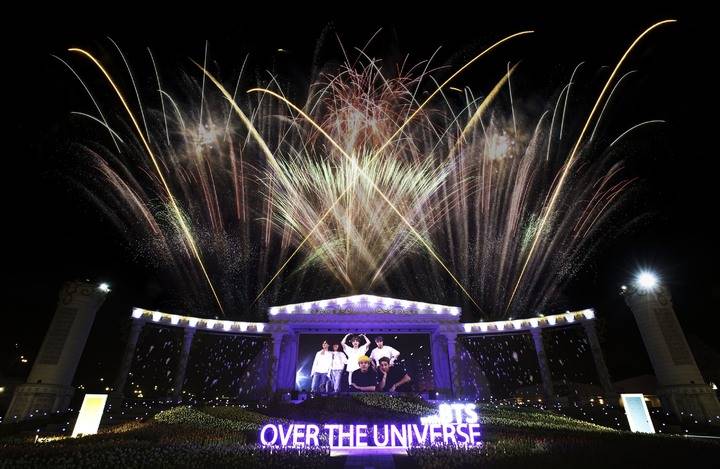
BTS is back in military uniform. Not because they re-enlisted — they came back for reserve forces training, known in Korea as Yebigun (예비군).
According to reports, members used a short break in their Arirang World Tour to attend their training, and witnesses said they took part in CPR practice and shooting drills just like everyone else. Photos shared on the group’s official social media show them in the familiar Korean digital camouflage uniform.
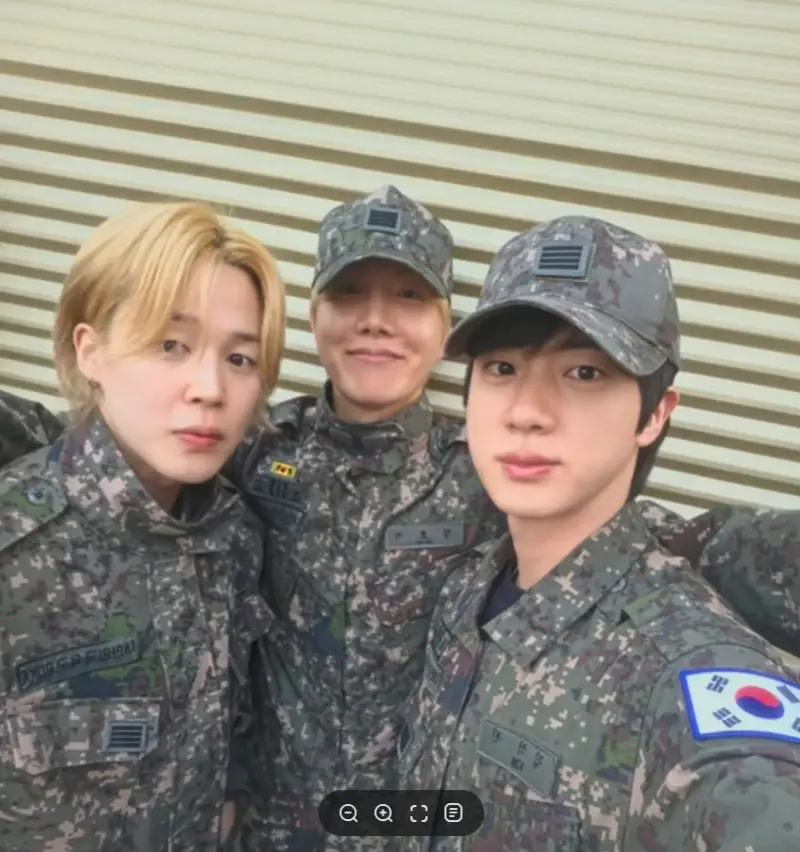
For many international fans, this raised a simple question: “Didn’t they already finish their military service?” They did. But in Korea, finishing your service is not quite the end. Here’s how it works.
Korea is still technically at war
To understand any of this, you need to know one thing first: the Korean War never officially ended. The fighting stopped in 1953 with an armistice, not a peace treaty. South Korea is a country in a state of ceasefire.
This shapes how the whole country runs, from mandatory military service to civil defense drills. Every Korean knows it, even if daily life in Seoul feels completely peaceful.
Military service doesn’t end at discharge
All able-bodied Korean men serve roughly 18–21 months in the military. After discharge, they are automatically placed in the reserve forces, and from the following year they are called back for training every year.
The reserve forces were created on April 1, 1968, to strengthen Korea’s ability to deter North Korean aggression. Today they matter even more: with Korea’s very low birth rate, the active-duty military is shrinking, so trained reservists are an important part of national defense.
In fact, some people say the real backbone of the Korean military isn’t the active-duty soldiers but the reservists. Korea has about 450,000 active-duty troops, but around 2.5 million reservists. If war broke out again, reservists would make up most of the fighting force. Every Korean man heading to reserve training knows this.
What is Yebigun (예비군)? The 8-year reserve system
Reserve duty lasts 8 years. The training changes depending on which year you are in:
| Reserve year | Training | What it’s like |
|---|---|---|
| Years 1–4 | Mobilization training (동원훈련) | Type I: 2 nights 3 days, staying on base. Type II: commute-style, go home each day |
| Years 5–6 | Local reserve training (지역예비군) | Basic training plus a short local-defense drill (작계훈련) |
| Years 7–8 | No training | Still registered as reservists |
Reservists do get paid — but not much. In 2026, the 2-night mobilization training pays about 95,000 won, and the commute type about 50,000 won. This has become a public debate in Korea, since the pay is far below minimum wage for the time spent.
Where do reservists train? It depends on where you served. Men who served in special forces go back to their own former unit for training. Those who served in regular units report to a unit assigned to them.
The training isn’t really about learning new things. It’s a reminder. New content gets added when something changes, but in my experience, it mostly keeps your body from forgetting what you did as an active-duty soldier: shooting, first aid, gas masks, and emergency procedures.
Reservists who aren’t mobilized to a unit train in the area where they live, and their role is local defense. In my case, that meant climbing pretty much every mountain in my neighborhood. That’s when I found out how many trenches were hidden in the hills right around my home.
You must wear your military uniform to reserve training, and this part always made me laugh. Everyone wears the same uniform, but with different unit patches, all gathered in one place. And if someone’s uniform looked even slightly different, every head would turn to look at him.
There is also a famous Korean joke: put any man in a reserve uniform and he instantly becomes a different, slightly lazy person — sitting anywhere, wearing the cap crooked, walking slowly. Koreans call it the “Yebigun mode,” and it’s part of why seeing world-famous stars in this uniform feels so funny and relatable to Korean fans.
After Yebigun comes Minbangwi (민방위)
When the 8 years of reserve duty are over, Korean men move on to Minbangwi (민방위), the Civil Defense Corps, until the end of the year they turn 40.
When Korean men move into Minbangwi, they joke: “Now the country doesn’t see me as a man anymore. If war breaks out, I get to stay with my family.” The reason for the joke is that civil defense belongs to local governments, not the Ministry of National Defense.
Minbangwi focuses on defending and keeping your local area running. It’s education, not training, and you don’t have to wear a uniform.
- Years 1–2: about 4 hours of education per year, usually in person
- Years 3–4: about 2 hours, taken online
- Year 5 and later: about 1 hour (emergency call or online)
Skipping it without a valid reason can lead to a fine, so most people simply get it done — often from their phone.
I once wrote that if you urgently need a toilet while traveling in Korea, you should look for a community service center (dong office) or a district office (How to Find a Toilet in Korea When You Need One Fast). Those same community centers, spread across every neighborhood, are the base of the civil defense system. In my civil defense education, we were taught that in an emergency, members would gather at these centers to receive their equipment, then protect and maintain their local area.
People say Minbangwi members won’t be mobilized in a war. But you can’t simply leave town with your family, and if a call-up order comes, you have to answer it. So Korean men still think of themselves as part of the war effort.
When my own Minbangwi years ended, I joked to my family: “Now if a war breaks out, I can evacuate with you.”
Civil defense drills: what travelers should know
Civil defense isn’t only for men in their 30s. Korea also holds nationwide air-raid drills for everyone. In 2026, for example, a national drill took place on August 20 from 2:00 to 2:20 p.m.
If you happen to be in Korea during one:
- You’ll hear sirens and get an emergency text alert on your phone. Don’t panic — it’s a drill, and it’s announced in advance.
- People may be guided into shelters. Subway stations and underground parking lots are common civil defense shelters. Look for the yellow-and-green shelter sign.
- Some roads may be briefly closed to practice clearing the way for emergency vehicles.
- It’s over in about 20 minutes. Just follow staff instructions and you’ll be on your way.
The government’s Emergency Ready App (안전디딤돌) offers disaster alerts and shelter locations in English, so it’s worth installing before your trip.
Why this matters to Koreans
When BTS members enlisted, there was a big debate in Korea about whether top entertainers should get exemptions. In the end, all seven served. Seeing them show up for reserve training too — the same boring, sometimes inconvenient duty every Korean man goes through — is one reason many Koreans respect them.
For Korean men, Yebigun and Minbangwi are a normal part of life between their 20s and 40. Now, international fans know what that uniform means, too.
Read next
- How to Find a Toilet in Korea When You Need One Fast
- Wrong Direction or Need the Toilet? How to Re-enter the Korean Subway Without Paying Twice
If you found this helpful, feel free to share it. If you quote or use any part of it, please credit Look at Korea with a link to this post.