At some point, bangeo-hoe (방어회, raw yellowtail) became one of the foods Koreans love most in winter. Yellowtail is in season when it puts on fat in the cold months, roughly from November to February. If you visit Korea during this time, I recommend trying it at least once.
Yellowtail in My Memory
Bangeo-hoe used to be something you ate at Japanese restaurants in Korea, and not the casual kind but the pricier ones. Ordinary raw fish restaurants (hoetjip, 횟집) did have yellowtail in winter, but it wasn’t popular. Koreans were used to white-fleshed fish, and yellowtail is a red-fleshed fish. Most of the yellowtail served back then was small, with little fat, so honestly it didn’t taste that good.
Then in the 2010s, a yellowtail boom suddenly began. Ordinary raw fish restaurants started selling daebangeo (대방어, large yellowtail), even writing the weight of the fish on the menu, and it became hugely popular. Back then, a restaurant called Bada Hoe Sarang (바다회사랑) near Hongik University Station had people lining up outside even in the freezing cold, and it was featured on TV as well.
Today, you can find bangeo-hoe at almost any raw fish restaurant in Korea in winter, and the quality is generally good.
For reference, daebangeo usually means yellowtail weighing 8 kg or more. Personally, I prefer fish over 10 kg.
I think there are several reasons it became so popular. Yellowtail farming has been very successful in Korea, which brought the price down a lot and made it possible to farm big fish. On top of that, when salmon sashimi became a big hit among Koreans, who had mostly eaten white-fleshed fish raw, people grew more open to red-fleshed fish.
Eating Bangeo-hoe at a Korean Raw Fish Restaurant
When you order bangeo-hoe at a regular raw fish restaurant, it comes with side dishes similar to what you’d get at a Japanese restaurant: seasoned laver (gim), pickled shallots (rakkyo), soy sauce, and wasabi. Of course, chogochujang (초고추장, a sweet and sour red pepper sauce) is always on the table too. The Korean way to enjoy it is to place a slice on a piece of gim, dip it lightly in soy sauce or chogochujang, and eat it as a wrap.
The bigger the yellowtail, the more different cuts you get on the platter. Each cut differs a lot in flavor and texture, so going to a restaurant known for yellowtail improves your chances of a really good plate.
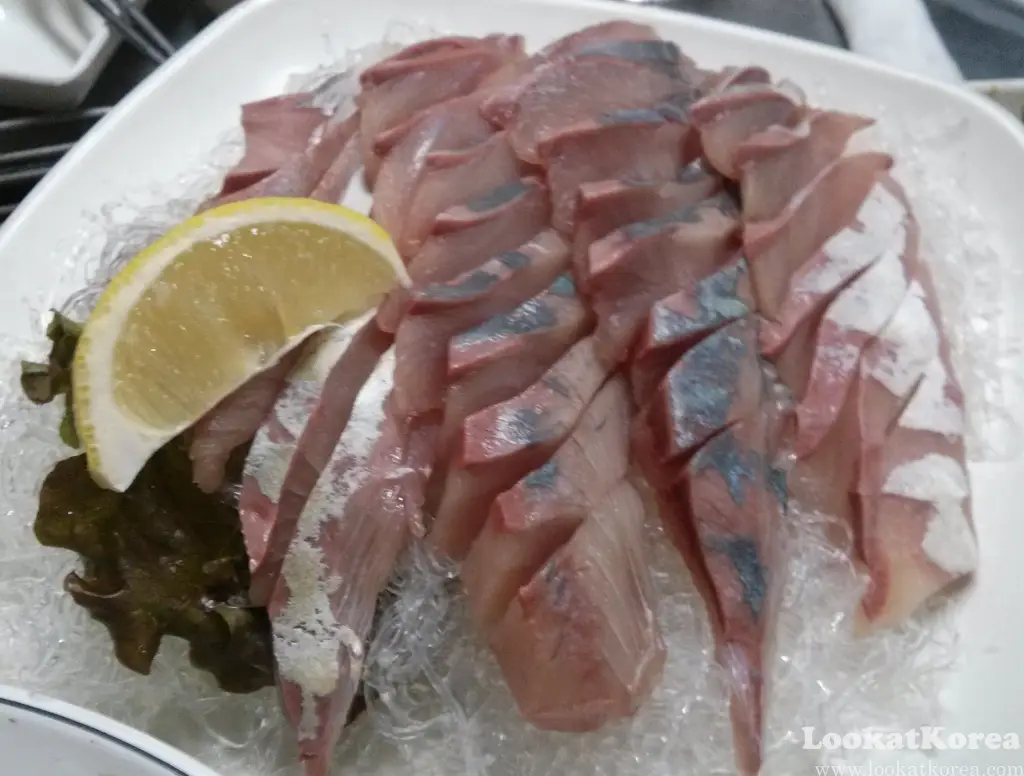
This is a smaller yellowtail. It might also be bushiri (부시리, yellowtail amberjack, hiramasa in Japanese), a fish that looks very similar. As you can see, there isn’t much color difference between the cuts.
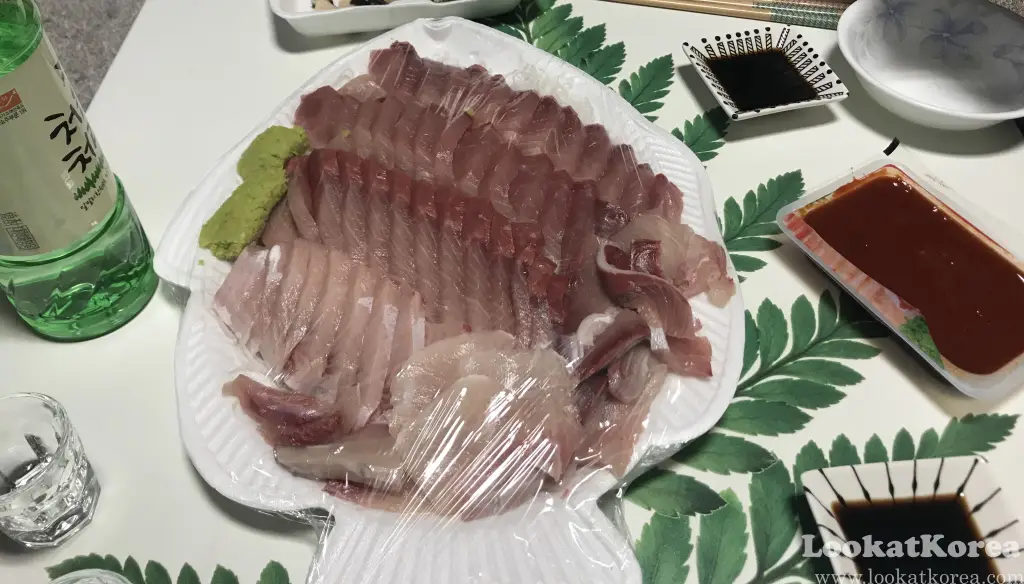
With a big yellowtail, you can tell several cuts apart just by their color. The fatty belly is pale and rich, while the back meat is reddish and cleaner in taste. This one I took home and ate with soju.
Don’t Miss Daebangeo-hoe in Winter
Outside Korea, yellowtail (buri in Japanese, or hamachi for younger fish) is probably better known as sushi. Sushi became popular abroad long before other raw fish dishes, after all. In Korea, though, it’s more common to eat yellowtail as sashimi like this rather than as sushi.
Raw fish might feel unfamiliar, but if you’re in Korea in winter, please give bangeo-hoe a try. Fatty winter yellowtail is truly delicious. And you don’t have to hunt for a 10 kg+ fish. Even around 8 kg is plenty tasty.
If you found this helpful, feel free to share it. If you quote or use any part of it, please credit Look at Korea with a link to this post.