Have you ever heard of Hanwoo?
Hanwoo has become Korea’s signature beef, and today it is known as a premium beef. This post is all about it.
When people talk about Korean BBQ, they usually recommend samgyeopsal (pork belly) or dwaeji galbi (marinated pork ribs). But if your budget allows, I strongly recommend trying Hanwoo at least once.
What Is Hanwoo?
Break down the word and Hanwoo simply means “Korean cattle.”
That’s right. Originally, it was a general term for all cattle in Korea. Today, however, it refers to one specific breed of Korean beef.
As Korea moved away from an agricultural society and industry grew, cattle were no longer needed for hauling loads or working the fields. The Korean government then began breeding cattle for meat, improving native Korean cattle as a pure breed while also crossbreeding with foreign breeds.
At first the focus was on increasing meat production, but in the 1990s it shifted toward improving meat quality. Eventually, breeding moved in the direction of preserving the pure Korean bloodline while improving quality, and from that point Hanwoo came to be recognized as its own breed of Korean beef.
In other words, domestic Korean beef is divided into two main types: Hanwoo and yukwoo. Hanwoo keeps its native bloodline and genetic traits, while yukwoo does not. For example, if a calf is brought in from overseas and raised in Korea, it becomes yukwoo.
So the beef you can buy in Korea falls into three groups: Hanwoo, yukwoo, and imported beef (mostly from the US and Australia).
A little complicated, but it makes sense, right?
Hanwoo Grades
Hanwoo, with its managed bloodline, is divided into five grades: 1++, 1+, 1, 2, and 3. For grilling, people usually eat grade 1 or higher.
I’m not sure why they made it so complicated. Simply numbering them 1 through 5 would have been easier. My guess is that it’s about psychology: “grade 5 Hanwoo” sounds like it came in last place. That’s just my guess, though.
1++ is called “two-plus” and 1+ is called “one-plus.” People shorten these even further to “tuppul Hanwoo” and “wonppul Hanwoo.” These nicknames started out as easy names butchers and beef restaurants used with customers, and they have since become common.
So what’s the difference between the grades? A detailed explanation gets complicated, but simply put, the lower the grade, the lower the fat content, so you get less of the rich flavor and nutty taste from the fat when it’s grilled.
That’s why Hanwoo of grade 1 or higher is usually grilled as is, without any marinade. For example, you’ll hardly ever see anyone marinating one-plus Hanwoo in soy sauce.
Industry experts could probably explain it in more detail, but this is how most Koreans understand it: the higher the grade, the more marbling (fat), the better it tastes when grilled, and the higher the price. Thinking of it this way is good enough.
Why You Should Try Hanwoo
In my personal opinion, the breeding and preservation of Hanwoo has now truly taken hold. That’s why I think today’s Hanwoo has an outstanding flavor.
Unfortunately, Hanwoo is hard to find outside Korea. It is said to be exported, but that doesn’t seem easy. There are already many famous premium beefs around the world, and Hanwoo is neither especially price-competitive nor widely known. On top of that, each country has its own strict quarantine procedures. And the biggest reason of all: demand within Korea alone is already huge.
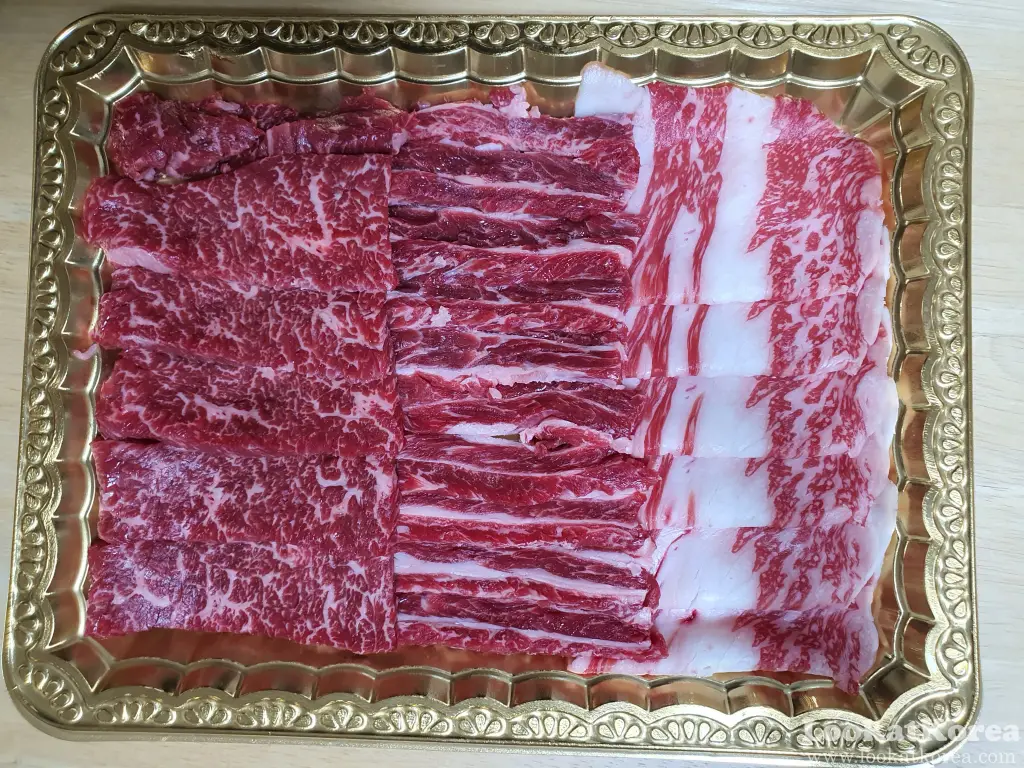
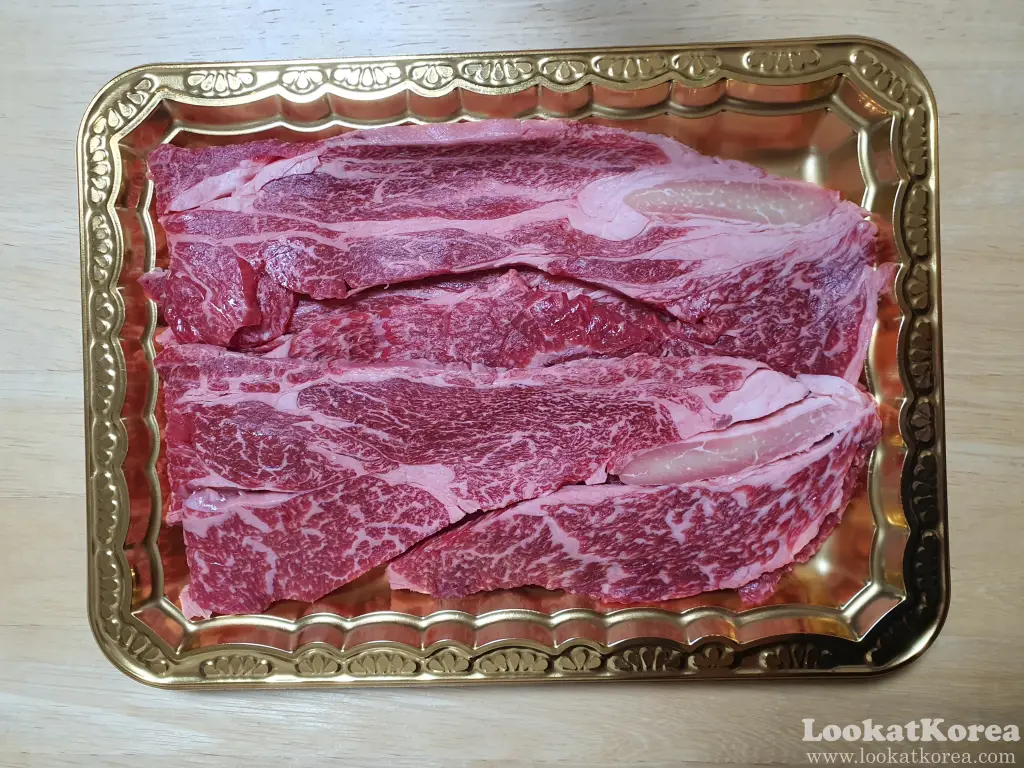
That’s why, if you visit Korea, I recommend you make a point of going to a Hanwoo specialty restaurant.
Hanwoo Specialty Restaurants
You can eat Hanwoo at Korean BBQ restaurants, but you need to know what kind of restaurant you’re walking into. Places that serve beef vary quite a bit: some sell domestic beef, some sell imported beef, some sell Hanwoo alongside other beef, and some sell only Hanwoo.
So look for a Hanwoo specialty restaurant that serves Hanwoo only.
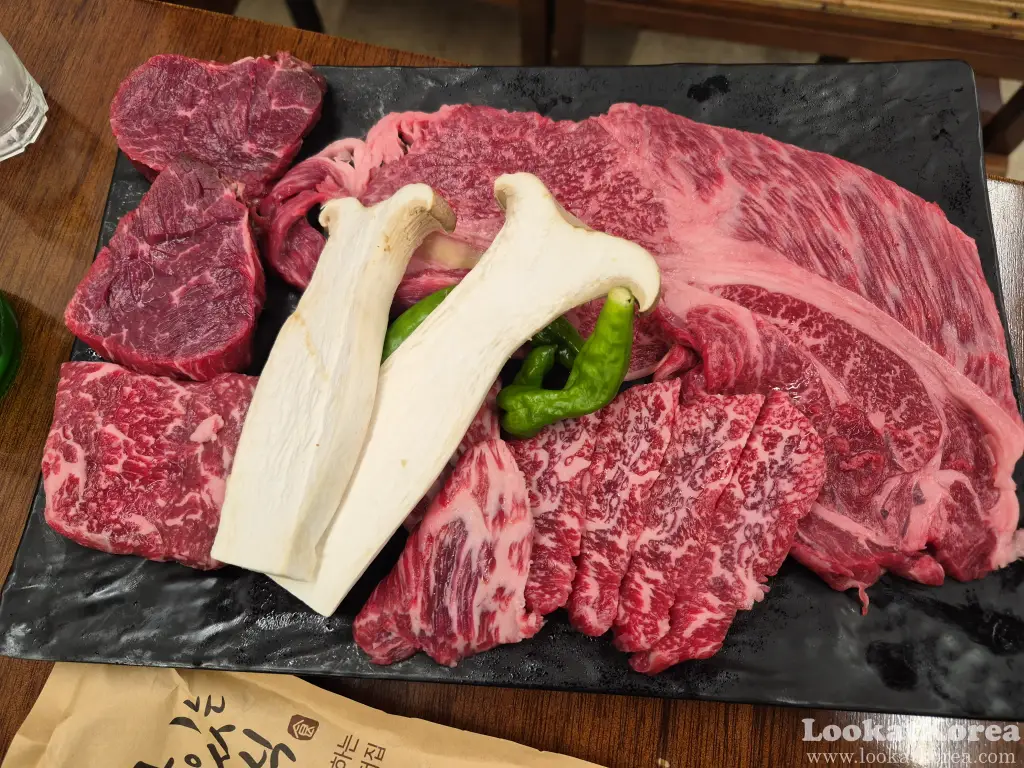
These restaurants usually serve mushrooms with the beef, and some places add shishito peppers as well. I don’t know why they give you one or two mushrooms to grill along with the meat, but mushrooms almost always come with it.
How long you grill Hanwoo depends on the cut. I like mine lightly cooked, just a quick sear on each side over the fire. That’s personal preference, of course, so if you’re not sure how long to cook it, I recommend asking the staff.
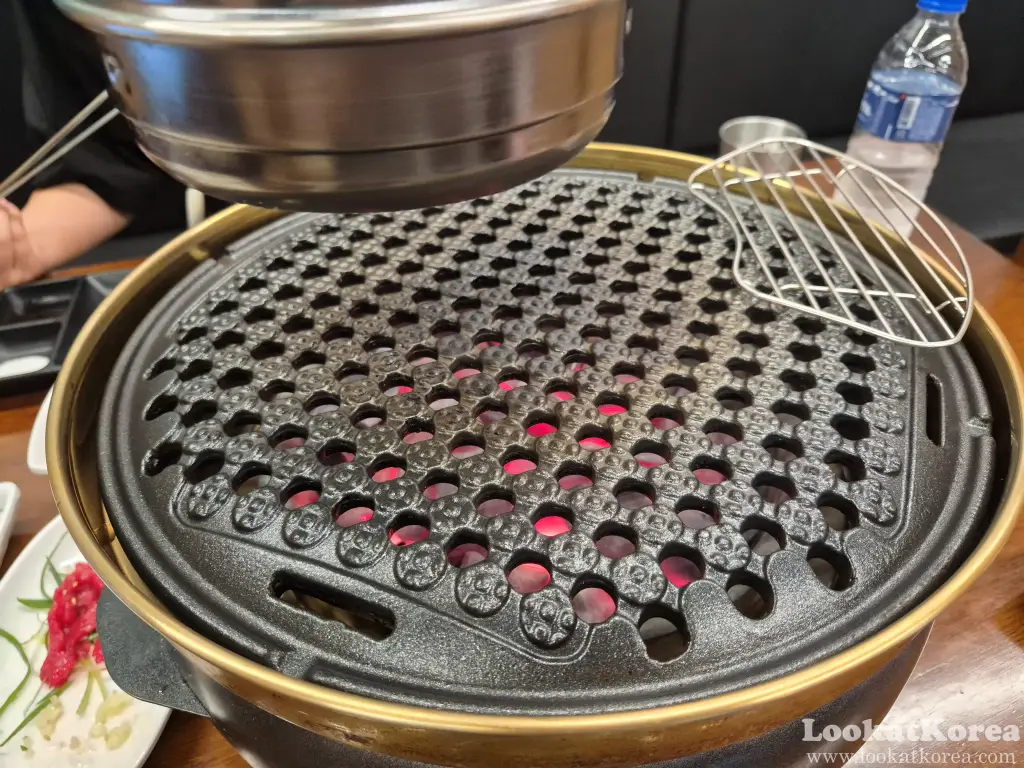
Hanwoo specialty restaurants mostly use charcoal and grill the meat on a perforated grill plate. If you’re given a gas burner or a flat, pan-like plate without holes, it might be worth having second thoughts. That said, I’ve never been served anything else at a Hanwoo specialty restaurant so far, so you probably don’t need to worry too much.
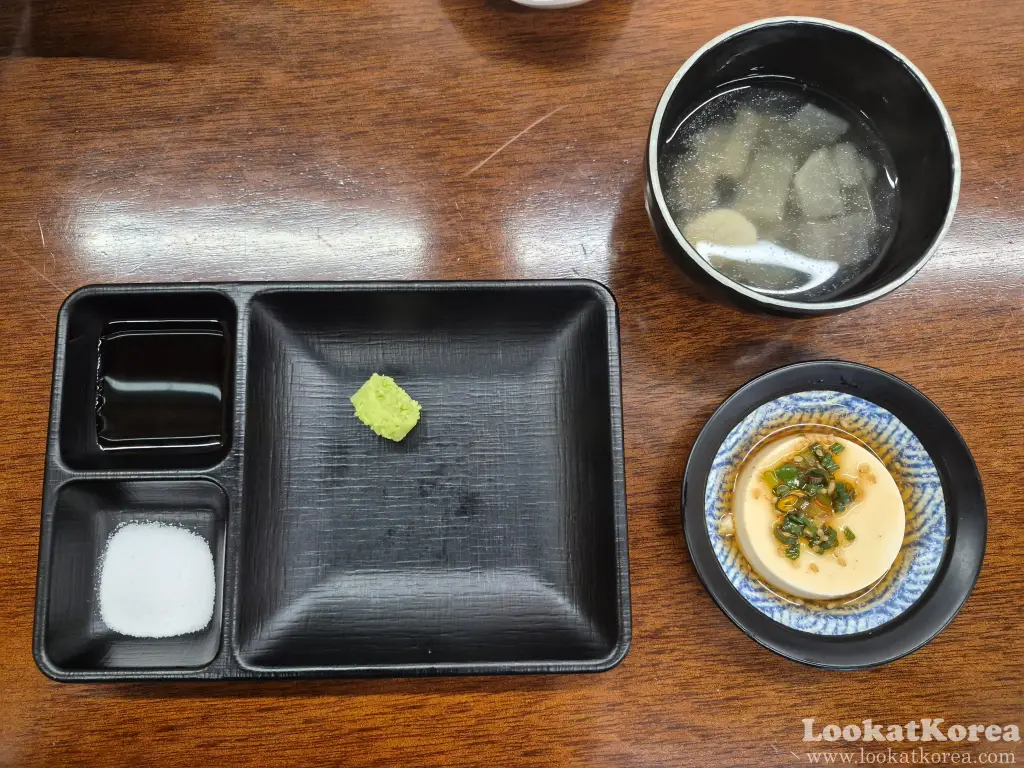
You’ll get salt for dipping the meat, and these days wasabi is often served too. Some restaurants also serve sogogi muguk (beef and radish soup) by default, but this varies by restaurant.
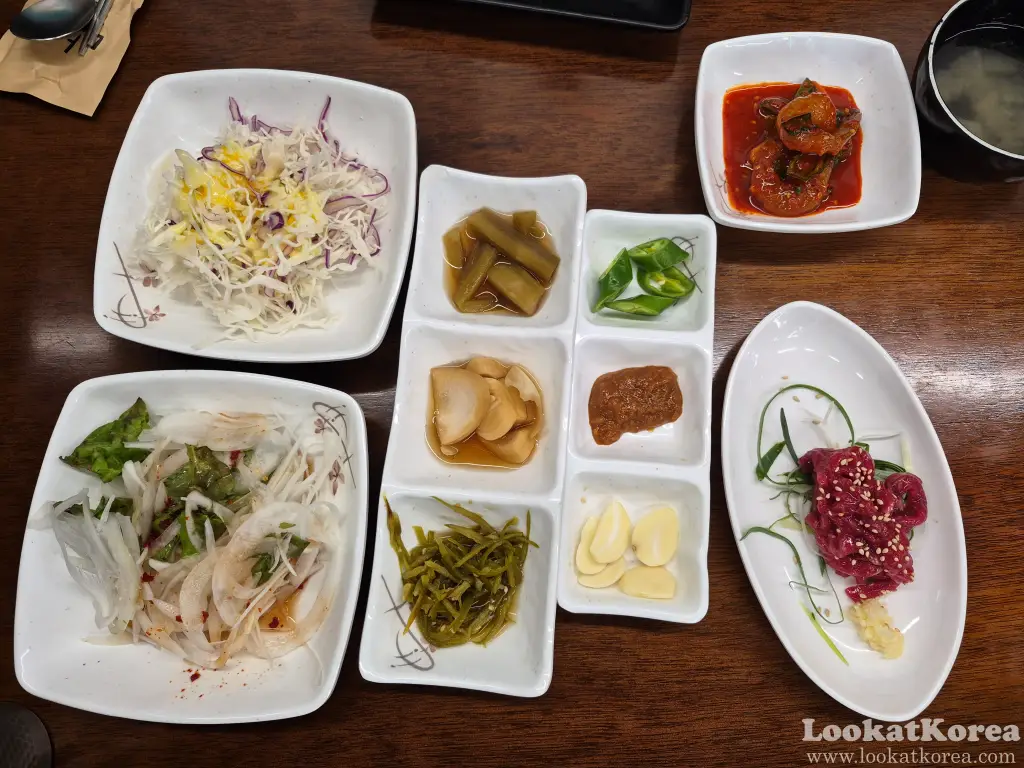
The biggest feature of a Hanwoo specialty restaurant is that no lettuce or other wrap vegetables are served. At most Korean BBQ restaurants, wrap vegetables like lettuce are a must, but not here. You’ll get sliced garlic and chili peppers, so ssamjang (dipping paste) is served, but no wrap vegetables. You can take it to mean the meat is so good on its own that there’s no need to wrap it. Some restaurants also serve yukhoe (Korean beef tartare) on the side.
Tips for Enjoying Hanwoo
I really love Hanwoo, but eating only heavily marbled cuts isn’t easy. It gets rich and greasy pretty quickly.
Even at a Hanwoo specialty restaurant, not every cut comes in at the same grade. So start grilling the cuts with less marbling first, and save the heavily marbled cuts for last.
As I mentioned earlier, if you don’t know how long to cook it or which cut to eat first, don’t hesitate to ask the staff.
Ordering individual cuts is nice too, but that’s for when you already know the characteristics of each cut. If it’s your first time, ordering the assorted set the restaurant has prepared is the best way to go.
Read next
If you found this helpful, feel free to share it. If you quote or use any part of it, please credit Look at Korea with a link to this post.