Dakhanmari
Among Korean chicken dishes, there is a soup dish that is similar to Baeksuk and Samgyetang but quite different in several ways. It is called Dakhanmari.
Unlike Baeksuk and Samgyetang, which require a long time to cook a whole chicken thoroughly, Dakhanmari is prepared in a way that allows it to be served and enjoyed in a relatively short time.
The Origin of Dakhanmari
From the 1970s to the 1980s, Dongdaemun Market in Seoul was a major center for fabric and clothing manufacturing. From the late 1990s to the early 2000s, the area experienced the golden age of fashion shopping malls.
Although the market has declined considerably since then, Dongdaemun was an incredibly busy place during that period.
In particular, it served as a wholesale market for the entire country, making it a place where the lights remained on even in the middle of the night.
Because people worked at Dongdaemun Market until the early hours of the morning, there were many restaurants near the market where they could have a meal at unusual hours.
Dakhanmari was one of these dishes.
(Personally, I used to visit restaurants near Dongdaemun Market in the early hours of the morning until the early 2000s. There were so many good places to eat!)
In a fast-paced market environment, it was not easy to sell dishes such as Samgyetang and Baeksuk, which require a long cooking time. As a result, a new chicken dish that could be served to customers quickly was created. This dish became known as Dakhanmari.
It is said that the dish was given the name Dakhanmari because customers simply started ordering it by saying, “Please give me Dakhanmari.”
Characteristics of Dakhanmari
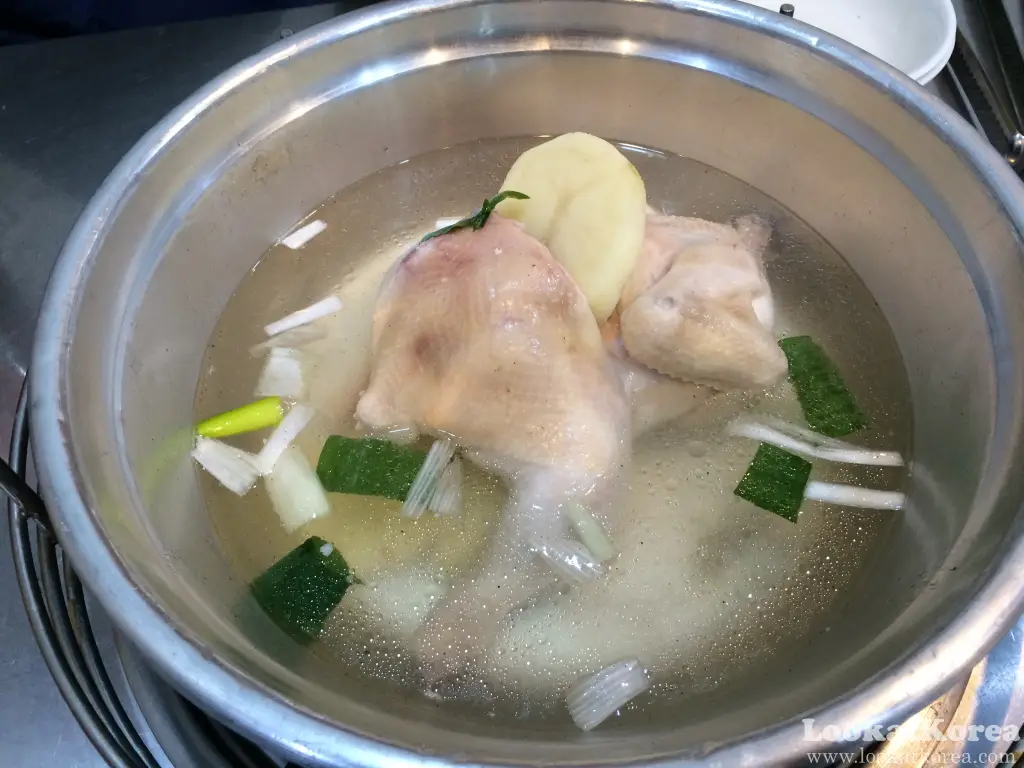
A large metal bowl contains a whole Dakhanmari dish.
The chicken is served after it has already undergone an initial cooking process.
Depending on the restaurant, the chicken may be cut into pieces before being served.
If it is served whole, you have to cut it yourself with scissors, which can be a little inconvenient.
Once the dish is served, you continue cooking it at the table.
Although it varies from restaurant to restaurant, rice cakes and potatoes are usually provided and cooked together with the chicken.
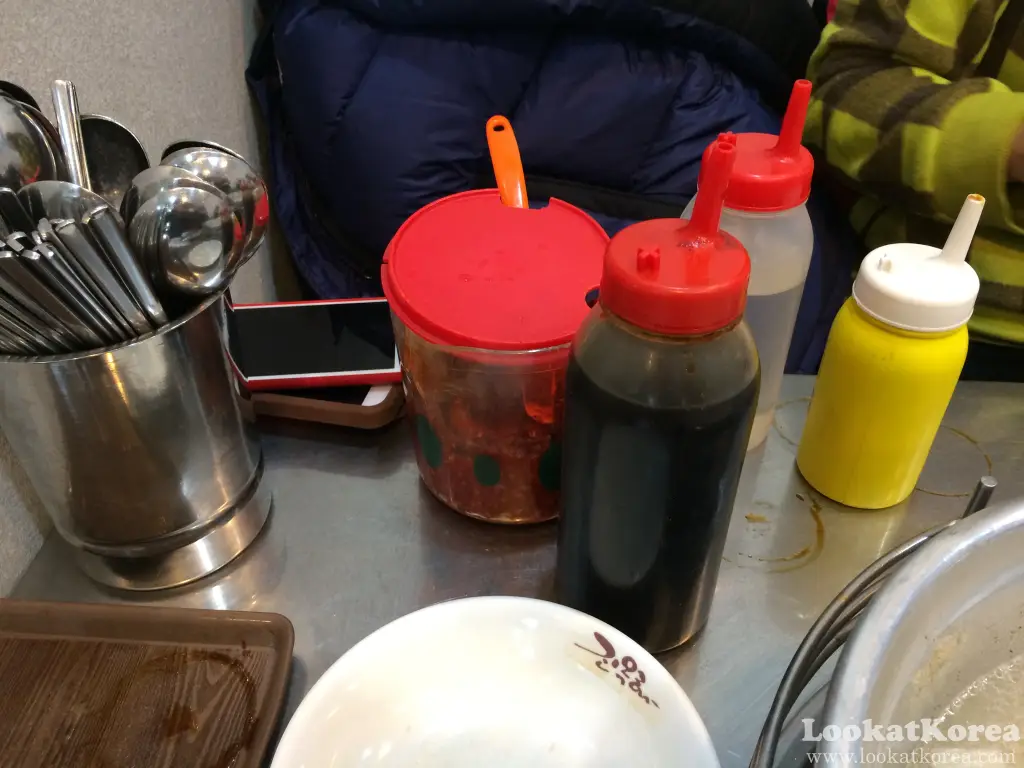
Dakhanmari is not a dish made by simmering chicken for a long time to extract a rich broth.
For this reason, a dipping sauce is served alongside the dish.
You can think of this sauce as one of the restaurant’s secret recipes.
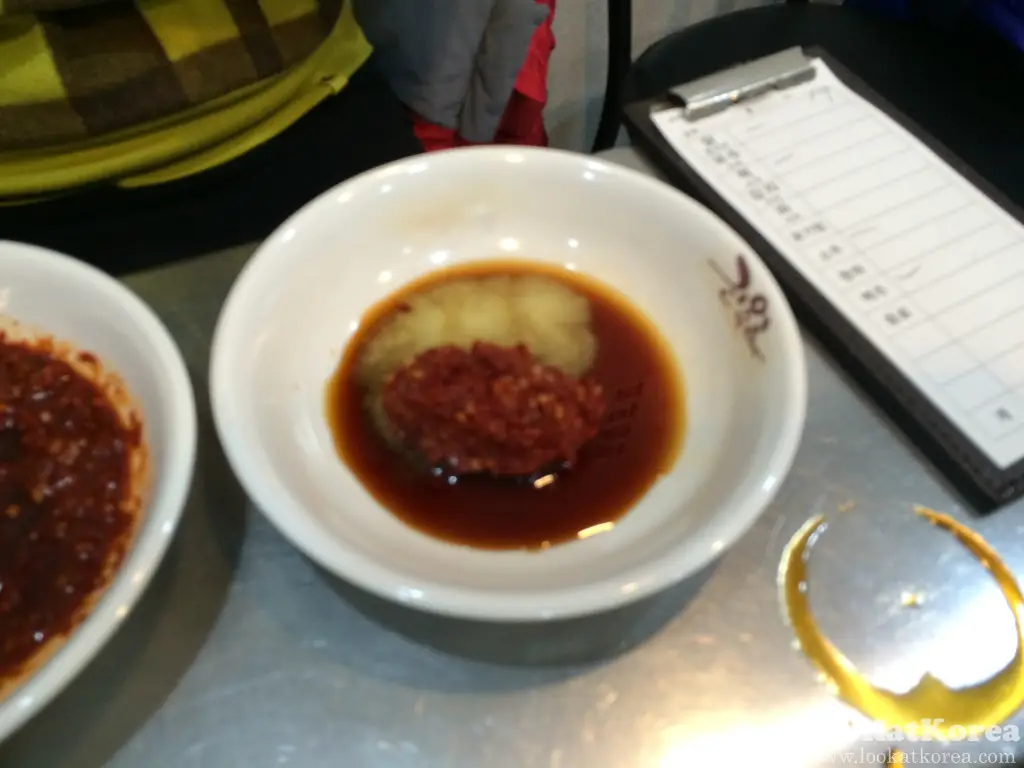
Mix the sauce ingredients according to your personal taste.
The sauce you prepare can be added to the chicken broth in the bowl to adjust its flavor. You can also dip the chicken into the sauce before eating it.
If you are unsure about the right proportions for making the sauce, you can ask a restaurant staff member or refer to the instructions provided inside the restaurant.
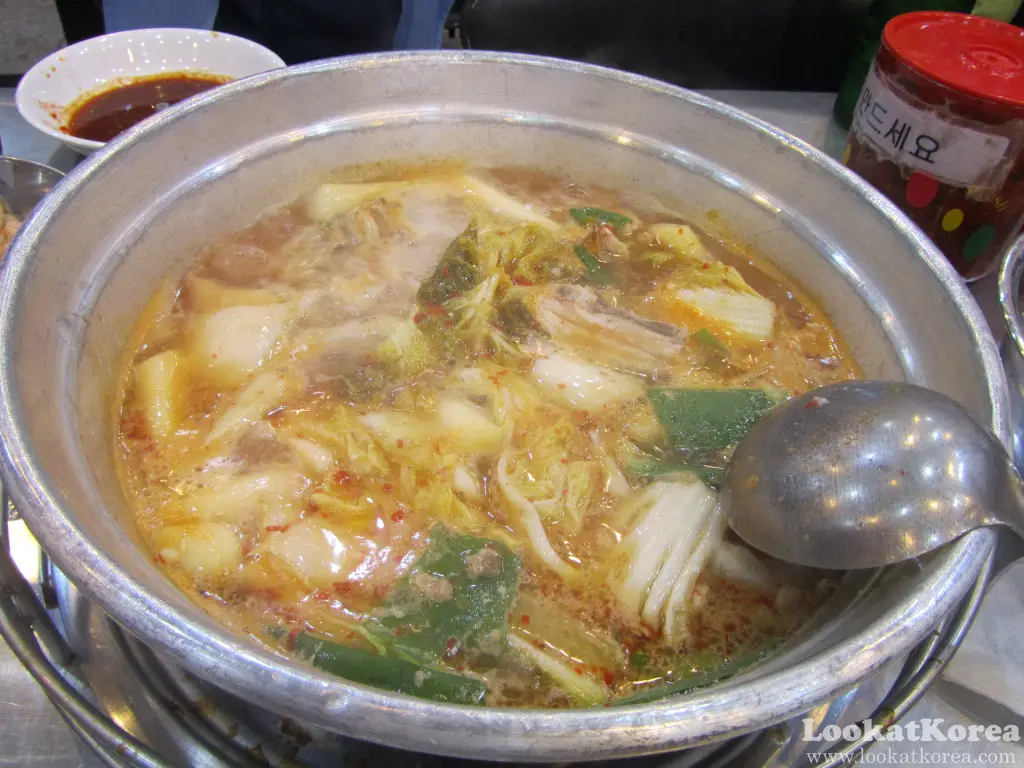
Finally, add the kimchi provided by the restaurant and let it boil together with the chicken.
Once the Dakhanmari is fully cooked, you eat the chicken first. Afterward, you can add noodles, known as Kalguksu, to the remaining broth and cook them.
After finishing the noodles, you can also add rice to the broth and boil it again to make something similar to porridge.
Looking at how Dakhanmari is eaten, the fact that seasoning sauce and kimchi are added tells us something about the dish. Although the broth itself is not particularly rich or intense, it has a clean and mild flavor.
Another advantage is that you can add noodles and rice after eating the chicken. These carbohydrates help make the meal more filling.
The Decline of Dakhanmari
Dakhanmari originated in Dongdaemun, Seoul, and gained popularity for a considerable period.
Restaurants specializing in Dakhanmari even began opening in other parts of South Korea.
The reason was simple: it was an affordable meal that could fill your stomach.
It was particularly popular among groups of adults because they could share Dakhanmari, add noodles and rice, and enjoy the meal with soju without spending too much money.
However, the price of Dakhanmari has increased considerably, and more people have started looking for food with stronger and more intense flavors. As a result, its popularity has gradually declined.
Even in Seoul, the number of Dakhanmari restaurants has decreased significantly. Many franchise-style restaurants have disappeared, while only established restaurants with years of experience and their own distinctive flavors continue to operate.
Do I Recommend Dakhanmari?
The last time I visited a Dakhanmari restaurant in Dongdaemun, I was genuinely surprised.
There were far more foreign customers than Korean customers inside the restaurant.
There were particularly many Japanese tourists, and I was so surprised that I even thought I might not be able to visit that restaurant again in the future.
Dakhanmari has the advantage of allowing you to prepare the seasoning sauce according to your own taste. It is also a mild dish that is not spicy.
These characteristics may be particularly appealing to foreign visitors.
Recommended Dakhanmari Restaurant – Jinokhwa Halmae Dakhanmari
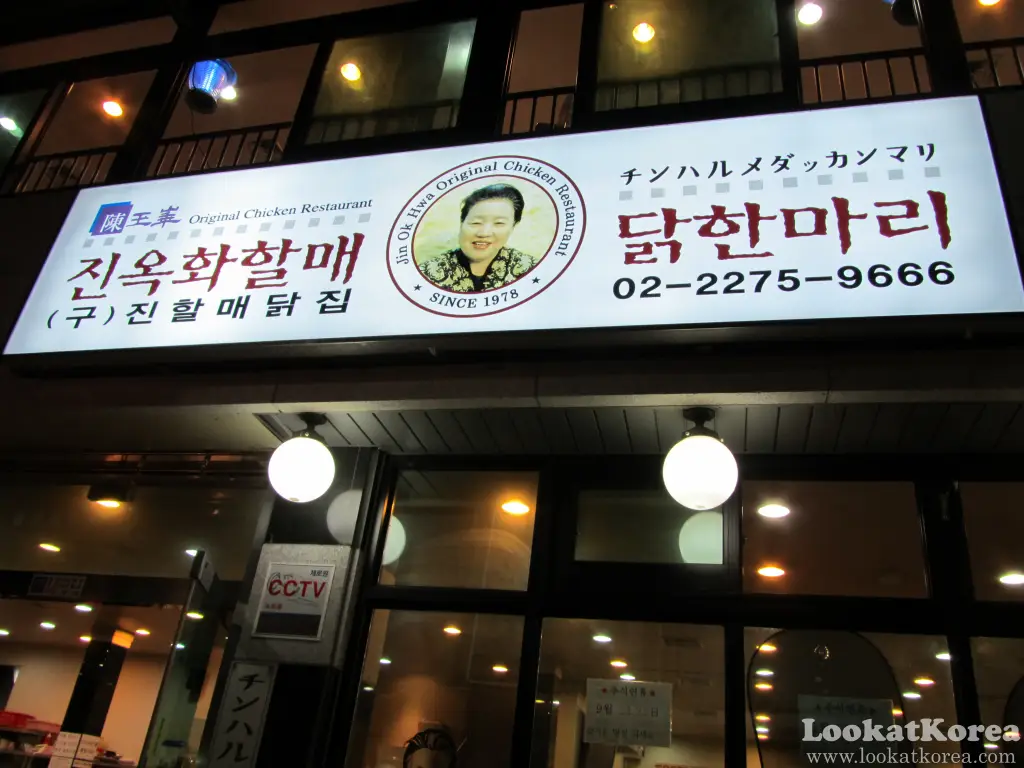
When a restaurant suddenly becomes popular in South Korea, similar restaurants often open nearby, sometimes leading to disputes over which restaurant was the original.
Dakhanmari restaurants are no exception.
Several restaurants have claimed to be the original Dakhanmari restaurant, but Jinokhwa Halmae Dakhanmari is the original restaurant for this dish.
For your information, the restaurant once suffered a fire that completely destroyed the building. Afterward, a new building was constructed, and the restaurant resumed business at the same location.
This is why the original restaurant does not look particularly old or run-down compared with other restaurants.
The restaurant is located in Dongdaemun, Seoul. If you would like to try Dakhanmari in Korea, I recommend visiting this restaurant.
Jin Ok-Hwa Original Chicken Restaurant
- Address: 18 Jong-ro 40ga-gil, Jongno-gu, Seoul, South Korea
- Phone: +82-2-2275-9666
- Opening Hours: Daily, 10:30 AM – 1:00 AM


