The word yukhoe is made up of yuk (meat) and hoe (raw food cut into thin slices). So, by the literal meaning of the word, yukhoe simply means raw meat.
However, over time yukhoe became the name of one particular seasoned dish. Because of that, raw beef eaten without any seasoning is called by a different name: yuksasimi.
Eating raw beef like this is one of the unique features of Korean food.
Yukhoe
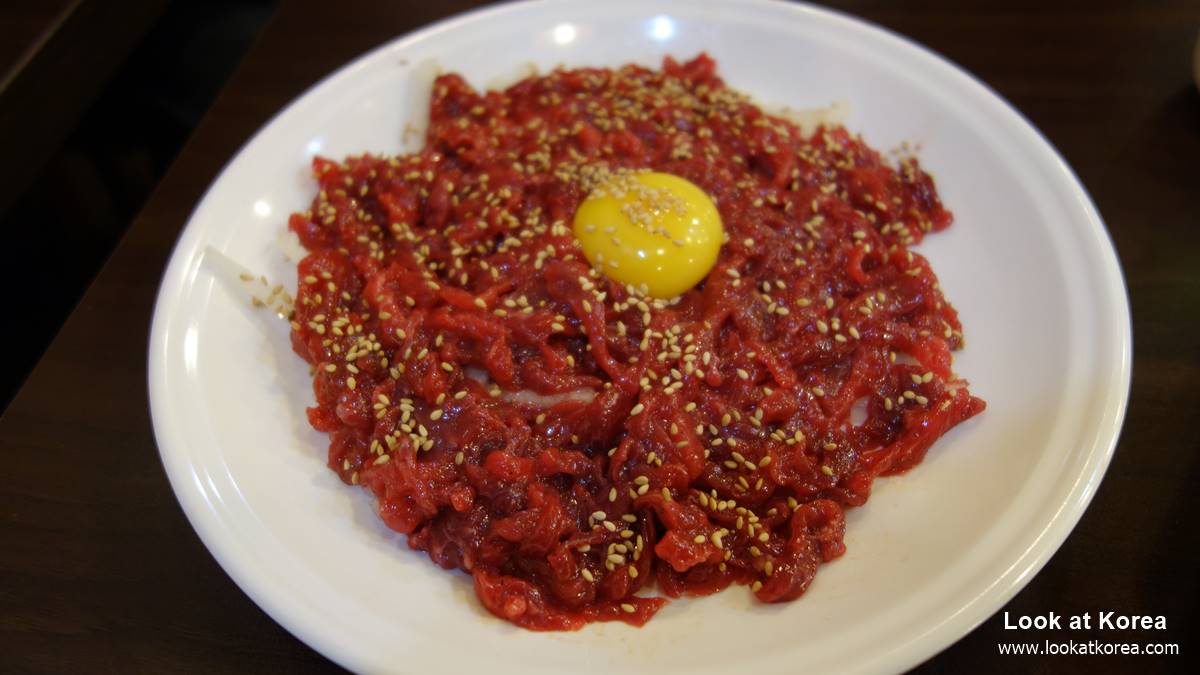
Yukhoe refers to the food that is eaten with sliced pears after slicing raw beef thinly and mixing with various spices.
Seasonings include soy sauce, minced garlic, sesame seeds, and sugar.
And egg yolk usually goes up.
Yukhoe is usually made with lean cuts that have little fat, such as udun (top round) or hongdukkae (eye of round). In the past, satae (shank) was also used, but it is rarely used these days.
The reason why people eat with pears is because pears have enzymes that break down proteins.
Yukhoe tastes sweet and savory, so once you start eating it, it tastes really good.
If yukhoe seems difficult to eat, I recommend you to try yukhoe bibimbap.
Yuksasimi
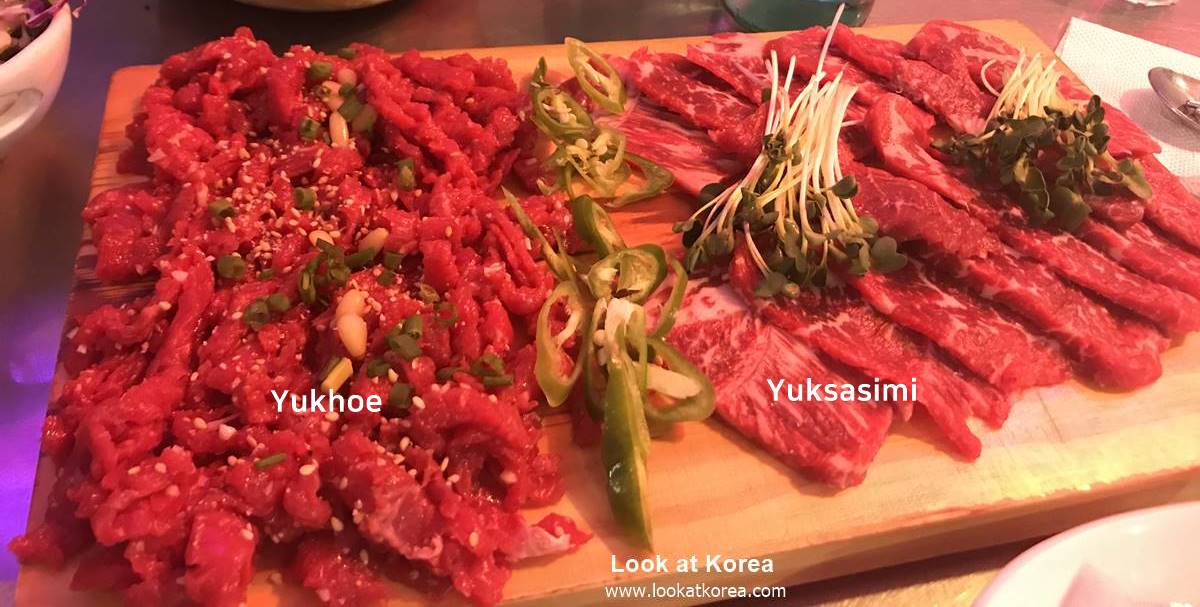
Unlike Yukhoe, Yuksasimi can be eaten faithfully to the taste of raw meat without any seasoning.
Yuksasimi is usually dipped in sauce.
The sauce varies depending on the region or restaurant.
There is a sauce made of salt and pepper in sesame oil, and a sauce made of red pepper powder and garlic in sesame oil.
Yuksasimi uses different parts of beef.
Yuksasimi is made with fresh beef slaughtered on the same day, so freshness is everything.
In the past, Hanwoo specialty restaurants often sold it simply as “yuksasimi” on the menu, without naming the cut. As it became more popular, restaurants started adding the cut to the menu name, such as chadolbaegi yuksasimi (brisket) or chaekkeut yuksasimi (striploin).
In Daegu, raw udun (top round) is also sold as the city’s famous mungtigi.
Yukhoe and Yuksasimi
If you’ve never eaten raw meat before, you may feel a little hesitant about trying yukhoe or yuksasimi.
I think yukhoe is easier to start with, because the seasoning makes it feel less like eating raw meat. Yuksasimi is usually more expensive than yukhoe, since it has to be made with fresh beef slaughtered on the same day.
If you visit Korea, I really recommend giving them a try.
If you visit Seoul, I recommend visiting a yukhoe restaurant in Gwangjang Market.
more info of Yukhoe : Google, Wikipedia
If you found this helpful, feel free to share it. If you quote or use any part of it, please credit Look at Korea with a link to this post.