If you’re visiting the Hongdae area or Mangwon Market, here’s one restaurant worth considering. It has become hugely popular with just one dish: udon. I haven’t been there recently, but I’m pretty sure there’s still a line.
About Korean Udon
Udon came to Korea from Japan. But even though it’s originally a Japanese dish, Korean udon tastes quite different. Maybe it’s because I’m Korean, but I find Japanese udon too heavy, so I rarely eat it.
Korean udon is all about eating noodles and a refreshing broth quickly. The broth is made with anchovies, dipori (dried big-eyed herring), radish and green onions, so it’s clean and light. It’s topped with crown daisy (ssukgat), chili flakes, fried tofu and chopped chili peppers for a spicy kick, and seasoned with soy sauce. Fun fact: because of a government language policy, it was once called garak-guksu, but that policy doesn’t seem to have worked. Today everyone just calls it udon.
Udon was loved by a great many Koreans. It was a cheap way to fill your stomach, and for drinkers it was also a cheap side dish to go with a bottle of soju. Udon was everywhere: street food tents (pojangmacha) at subway entrances and bus stops, udon stalls in traditional markets, highway rest areas, and even train platforms, where people would dash out to eat a bowl during a short stop.
These udon places have been disappearing one by one, and now they’re hard to find. There are several reasons, mainly rising labor costs, prices and rents that came with Korea’s economic growth. It became hard to keep a business going by selling only udon, which has a low price per customer. Another reason may be that Koreans have been exposed to so many different foods as the economy grew. Broth made only from anchovies and dipori just couldn’t keep up with Koreans’ changing tastes.
The Story of Mangwon-dong Udon and Donkas
This place started in 1994 as a pojangmacha (street food tent) and later became a proper restaurant. It was one of my personal favorites, because it was open 24 hours and I never found another place with udon this good.
I’d meet friends in the Hongdae area, go for drinks at a first, second and third spot until dawn, and before heading home someone would say, “I’m kind of hungry, want to grab something before we go?” This is where we went. When the alcohol from a long night started to wear off, one sip of this broth had a magical way of making you want to drink again.
You could often spot Korean celebrities here late at night. The Hapjeong, Mangwon and Hongdae area is full of singers’ practice rooms, recording studios and dorms, so after practicing or writing music until dawn, this was the place they came to when they got hungry.
Sadly, this place is no longer open 24 hours. Even back then there was often a wait, so I imagine it’s even worse now. They cut their hours during the COVID-19 pandemic and have kept the shorter hours since. I think it’s because the Korean culture of drinking and hanging out until dawn has been fading since the pandemic.
Inside Mangwon-dong Udon and Donkas
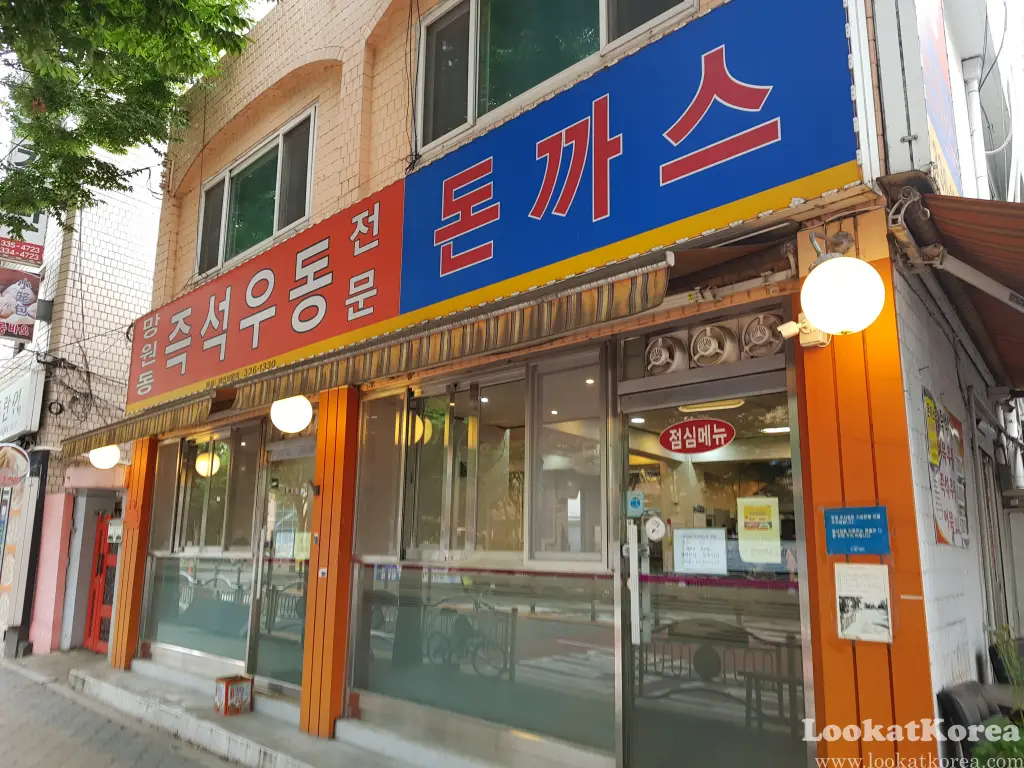
They still keep this signboard, which might look a little outdated or even careless today. This is an old-school Korean signboard. The sign doesn’t say “Bonjeom” (original branch), but on Korean portals like Naver and Kakao Map it’s listed as 망원동 즉석우동본점 (Mangwon-dong Jeukseok Udon Bonjeom), so keep that in mind when searching.
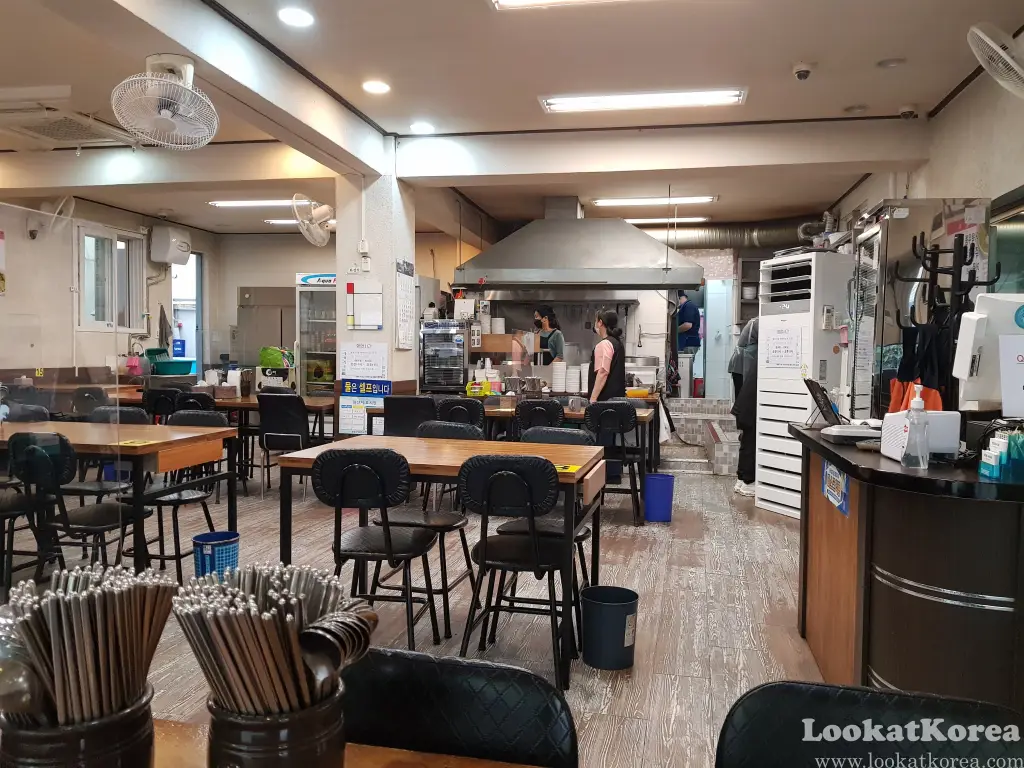
This place is never empty, so I could never take a photo of the inside. This one was taken when the COVID-19 pandemic was at its worst, which is why there’s nobody here.
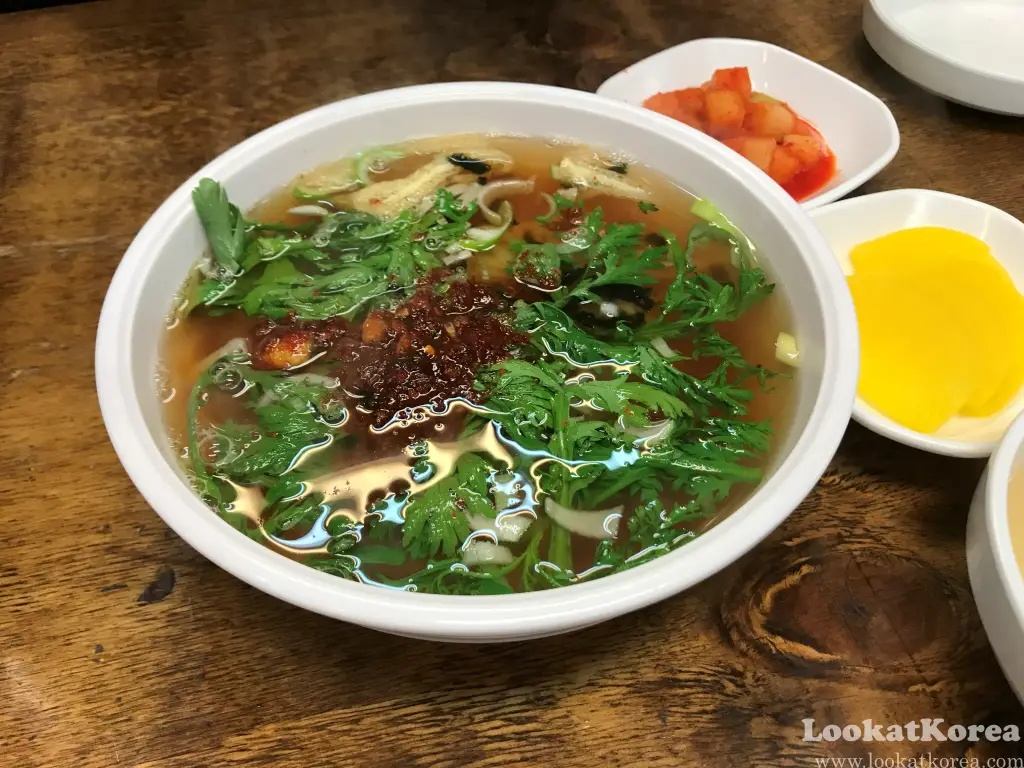
This is exactly what a typical Korean udon looks like. The green vegetable on top is not cilantro but crown daisy (ssukgat). It adds aroma and also makes the bowl look generous. Without the crown daisy, it would look pretty sad. There’s also some fried tofu and chili flakes sprinkled on top. Give it a few stirs, then eat the noodles with chopsticks and drink the broth straight from the bowl.
Note: the default udon here is spicy. It’s so spicy that even I can’t handle it, so be sure to order the non-spicy version (“an maepge” / 안 맵게). Please keep this in mind.
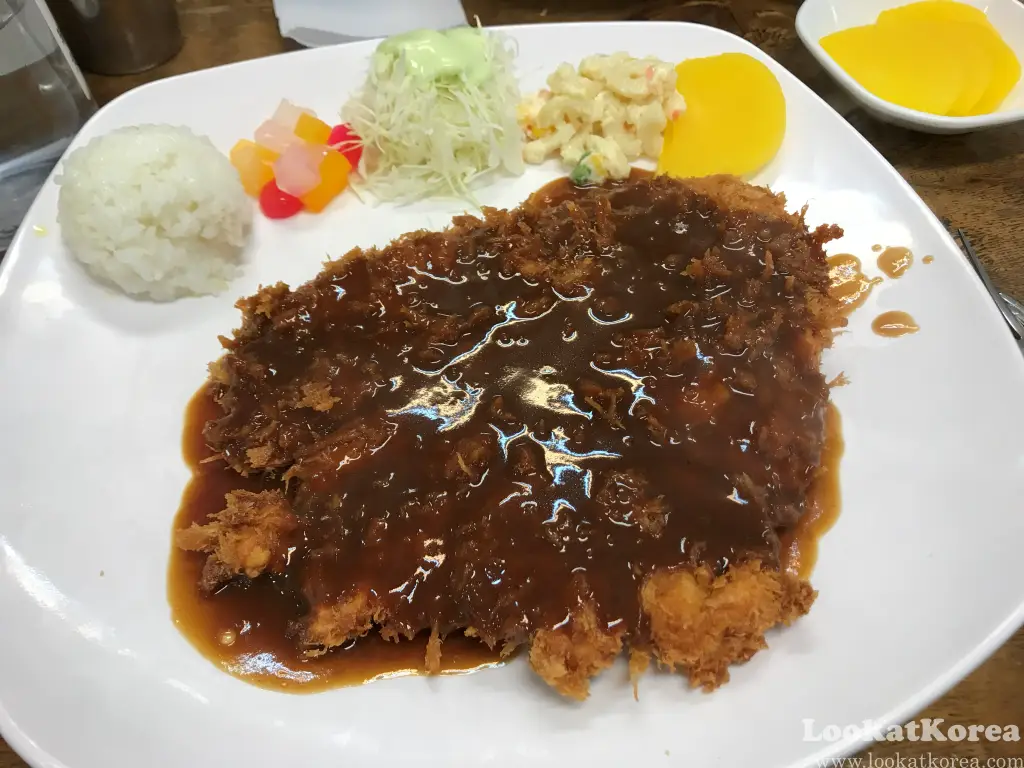
The donkas (pork cutlet) is quite large. I wouldn’t call it outstanding, but I can’t say it’s bad either. When two of us went, we’d each order an udon and share one donkas, and it was perfect as a side with drinks.
How to Order
Places like this are all about eating quickly and leaving, in other words, table turnover. That’s why you pay when you order. There are only four items on the menu: two kinds of udon, fish cakes and donkas.
- Jeukseok Udon (즉석우동): 7,000 won
- Eomuk Udon (어묵우동, fish cake udon): 8,000 won
- Eomuk (어묵, fish cakes), one serving: 7,000 won
- Donkas (돈까스, pork cutlet): 10,000 won
Just order the jeukseok udon. As I mentioned above, if you can’t handle spicy food, be sure to ask for it non-spicy.
Why “Bonjeom”?
The Korean name includes “Bonjeom,” which means original branch. I don’t know exactly when, but I think it’s because many restaurants with the same name popped up. As far as I know, there are no official chain branches.
On chilly or cold days, this udon is the first thing that comes to mind. I’ve moved far away and it’s hard to visit now, but it’s a true local favorite, so if you want to try a real local restaurant in Korea, give it a visit. According to recent reviews, there’s still a line, but it moves fast, so you won’t wait long.
Mangwon-dong Udon and Donkas: Basic Info
- Korean name: 망원동 즉석우동본점 (Mangwon-dong Jeukseok Udon Bonjeom)
- Hours: 11:00 to 21:20 (last order 21:00)
- Closed: every Sunday
- Must-try: jeukseok udon, eomuk udon, donkas
- Tips: the default udon is very spicy, so ask for non-spicy; pay when you order
If you found this helpful, feel free to share it. If you quote or use any part of it, please credit Look at Korea with a link to this post.