You may have heard of ganjang gejang among Korean dishes.
The crab is marinated in soy sauce and aged for a few days, but in the end you are eating raw crustacean, which makes it a rather unusual dish.
As Korean food has spread around the world, more and more foreigners have tried it. Still, I imagine many people are hesitant, so I’d like to introduce it here.
What Is Ganjang Gejang?
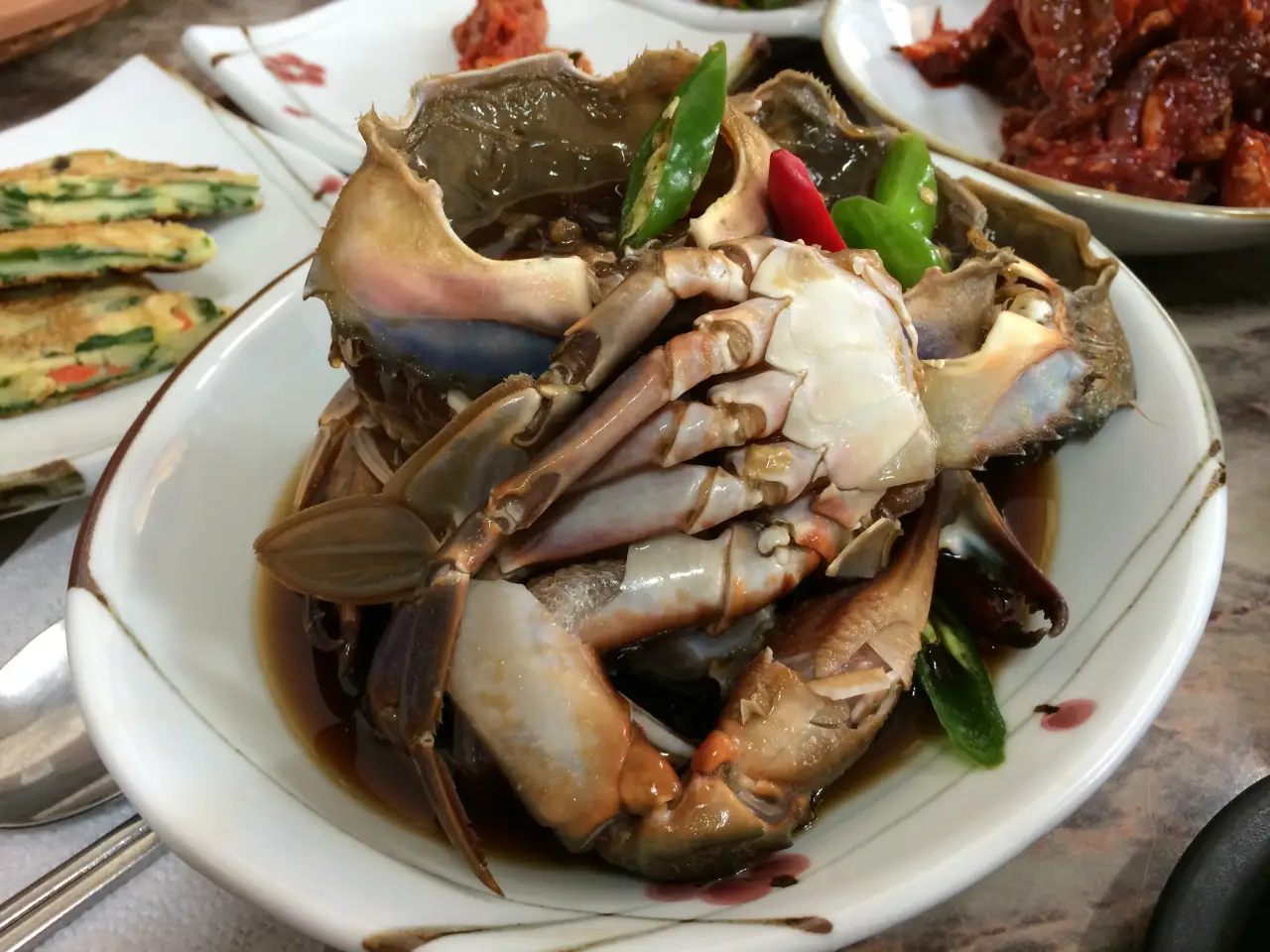
Ganjang gejang is made by soaking live crabs in a soy sauce that has been boiled and cooled, then letting them age.
Today the main ingredient is blue crab (kkotgae), but in the past crabs were easy to catch in both rivers and the sea, so many kinds of crab were used. Dishes made from these plentiful crabs developed over time, and ganjang gejang is one of them.
People probably cured crab with salt and liquor as well, but ganjang gejang is the version that remains today.
In the old days every household made its own soy sauce, so the flavor of ganjang gejang likely differed quite a bit from home to home. Now that most people use store-bought soy sauce, the taste has become more standardized.
Marinated crab exists in other countries too, but the taste of ganjang gejang is something you can only experience in Korea.
A Dish That Was Hard to Come By
Maybe it’s because I grew up in Seoul, but I had never even seen ganjang gejang as a kid.
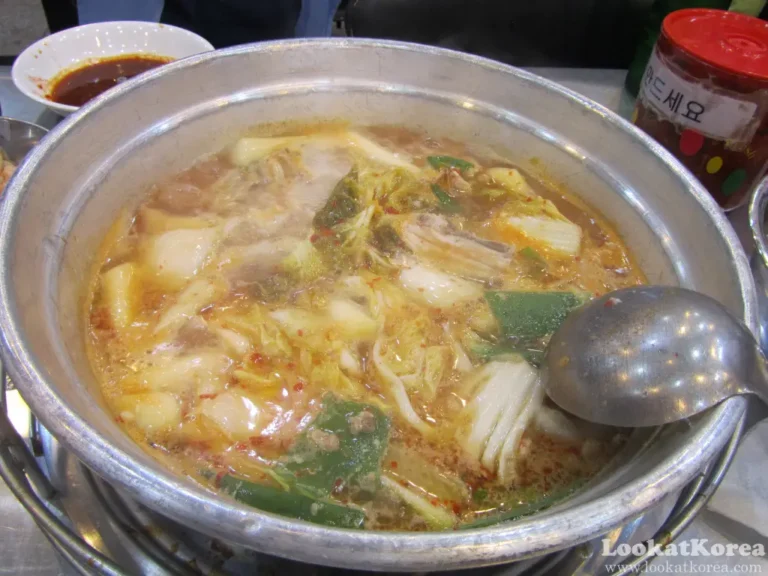
Even when we bought blue crabs, my family made spicy crab stew (kkotgae-tang) at home, never ganjang gejang. A few decades ago, you had to go to the coast to eat it.
Later, as flash-freezing technology developed and crabs began to be distributed frozen, restaurants serving ganjang gejang multiplied, and it became possible to enjoy it all year round.
How Ganjang Gejang Is Made
- Boil soy sauce once. Onion, ginger, green onion, garlic, and other ingredients are added while boiling. This combination is each restaurant’s secret. The boiled soy sauce removes the fishy smell of the crab and boosts its umami.
- Let the soy sauce cool.
- Pour the soy sauce over cleaned crabs, just enough to cover them, and age for about 3 days. Eat after the 3 days of aging.
This is a simplified version. The ingredients, the type of soy sauce, and the steps in between are what make a specialty restaurant’s recipe special.
How to Eat Ganjang Gejang
Ganjang gejang must be eaten with freshly cooked white rice. For this one meal, give up the brown rice and multigrain rice you eat for your health.
With freshly cooked white rice and ganjang gejang, you don’t need any other side dishes. Having other side dishes next to ganjang gejang is almost a luxury.
Korean food is usually eaten with a spoon and chopsticks, but ganjang gejang is eaten by hand.
Bite the crab lightly and suck out the meat and juices. Please avoid holding the crab with chopsticks and digging out the meat. Another way is to hold the leg and press it to squeeze out the meat. Restaurants usually provide disposable gloves, so just put them on.
For the shell, scrape the inside with a spoon, put rice into it, and mix.
Trying Ganjang Gejang for the First Time? Go to a Famous Specialty Restaurant
If it’s your first time, I recommend a specialty restaurant already well known among foreign travelers. I believe these famous places suit overseas visitors better than my personal picks.
In Seoul, there are places like Odari-jip in Myeong-dong and Pro Ganjang Gejang in Sinsa-dong, and information about them is easy to find.
Keep in mind that at such famous restaurants, foreign travelers may outnumber Koreans. Still, the taste is guaranteed to be at a decent level, so they are a good choice for a first try. Prices change over time, so please check before you visit.
I went to a well-known ganjang gejang restaurant in Yeosu, South Jeolla Province.
Yeosu has quite a few local restaurants with all-you-can-eat ganjang gejang, and Koreans often visit them when they go to Yeosu. These days, many offer only one refill instead of unlimited servings.
These restaurants also ship by courier. Call to order, and the ganjang gejang arrives at your home in 1-2 days. That’s how I ate it at home. If you live in Korea, this is a great option too.
Is Ganjang Gejang Safe to Eat?
This is probably what you’re most curious about. After all, it is raw crab.
Soaking live crabs in salty soy sauce doesn’t solve the hygiene issue on its own. However, freshwater crabs are not used these days. Restaurants use flash-frozen blue crab, and parasites die during the flash-freezing process.
Considering how much ganjang gejang Koreans eat every year, it has never been a major cause of food safety problems. You can enjoy it without worry.
For reference, in Korea it is common for pregnant women to avoid raw seafood.
Isn’t Ganjang Gejang Fishy?
This is another restaurant secret. Today’s ganjang gejang is not very salty and is made with various ingredients so that it doesn’t smell fishy. A restaurant whose ganjang gejang smells fishy won’t have customers.
Final Thoughts
Ganjang gejang is a unique dish you can only enjoy in Korea.
For overseas travelers it can be a new cultural experience, and it’s truly delicious with rice, so I recommend giving it a try.
One thing I find a little sad: in coastal areas where crabs are plentiful, it was an everyday food, but it has somehow become something like an expensive delicacy.
If you found this helpful, feel free to share it. If you quote or use any part of it, please credit Look at Korea with a link to this post.