Sundae-gukbap is a Korean rice soup made with sundae (Korean blood sausage) and pork offal. Not long ago it was a hard dish to recommend to foreigners. But looking at the sundae-gukbap served these days, I think it might be fine to recommend it now.
Just a few years ago, plenty of Koreans couldn’t eat sundae-gukbap either, for the same reason foreigners hesitate when they first see it. Now it has earned the nickname “Korean soul food,” so I think it’s time to give it a try.
Sundaeguk or Sundae-gukbap?
There are two names for this dish: sundaeguk (순대국) and sundae-gukbap (순대국밥). “Guk” means soup and “gukbap” means soup with rice. Since it always comes with a bowl of rice, sundae-gukbap is technically the correct name.
But most Koreans just call it sundaeguk. When you say sundaeguk in Korea, everyone assumes rice comes with it. So in this post, I’ll mostly call it sundaeguk too. You may also see it spelled “soondae guk” or described as “Korean blood sausage soup” on menus.
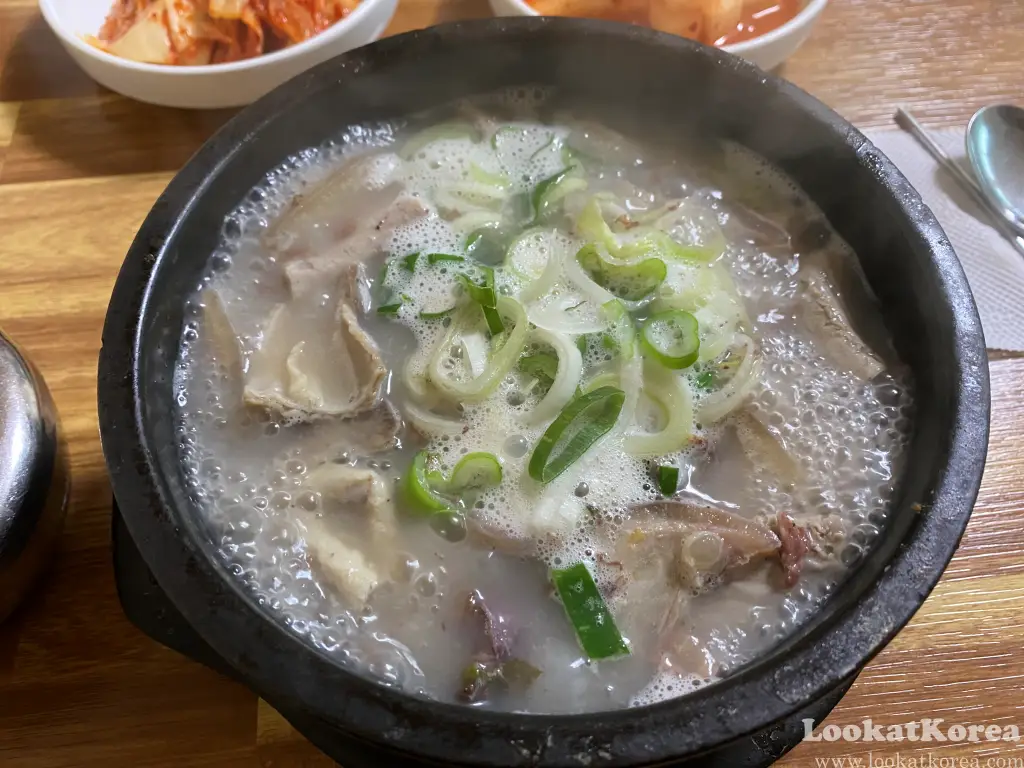
At some point, sundaeguk restaurants started popping up everywhere. Most of the new ones are franchises, but that alone shows how popular the dish has become in Korea. Why did it become so popular? Let me start with an old story.
Sundaeguk in the Old Days
When I was a kid and went to the traditional market with my mom, I had to hold my nose from the market entrance. Many of the restaurants clustered near the entrance were sundaeguk places, and the strong, musty smell of pork was hard to bear.
Walking past, I often saw middle-aged men and old men eating sundaeguk inside. On their tables were glasses that looked like ice-cold water, with drops of condensation on the outside. I found out later that those glasses were filled with soju. Back then, these restaurants sold soju by the glass, not by the bottle.
Thinking about it now, I kind of miss that. One glass is just right to drink with a meal, rather than ordering a whole bottle by yourself.
When I got a little older, I finally had the chance to try sundaeguk at that market. The broth was pale, not rich, with sundae and pork offal in it. The broth itself didn’t have much flavor, so I had to add a lot of dadaegi (spicy seasoning paste), and to cover the pork smell I added perilla seed powder and perilla leaves. Some people even poured in the kkakdugi (radish kimchi) juice.
I managed to finish it, but it wasn’t a great experience. Of course, I would eat it happily now, with a glass of soju. ^^
So sundaeguk used to be a dish with a strong pork smell. The reason is that the broth was made from pork bones. Compared to seolleongtang or other soups made with beef bones, it smelled more and the broth wasn’t as rich. On top of that, depending on the cook’s skill, the smell of pork offal is hard to get rid of. It wasn’t an easy dish even for Koreans. It was very cheap, though.
Because of this, many Koreans liked sundae but couldn’t eat sundaeguk. Especially people sensitive to smells tended to avoid it.
How Sundaeguk Changed
Then at some point, sundaeguk started to change. Instead of pork bones, restaurants began making the broth with sagol, beef leg bones. With a beef bone base, the soup got a subtle nutty richness, and the pork smell that had been the problem was greatly reduced.
Over time, restaurants also got much better at removing the smell from pork offal. Whether it’s thanks to more spices or something else, I don’t know, but it’s now hard to find the old smell in the offal. These days the smell is so mild that I rarely even add perilla seed powder anymore.
I think this is why sundaeguk became popular and so many sundaeguk restaurants opened. Now it’s hard to find anyone who says they can’t eat sundaeguk because of the smell.
But I Still Go to Local, Family-Run Places
Even with so many franchise sundaeguk restaurants around, I still look for independently run places, especially ones that have been in business for a long time. The reason is that, in my opinion, franchise sundaeguk tastes almost the same as seolleongtang. It seems like they just add sundae and pork offal to the same broth and sell it as sundaeguk.
Long-running local sundaeguk places are getting harder to find. Still, some are hanging on. These places start boiling their broth at 2 or 3 a.m., sell a limited number of bowls each day, and close when they run out. So at the popular ones, you sometimes show up and find them already closed.
The reason I like these restaurants is that their sundae and pork offal are excellent. Many of them seem to mix in beef bones for the broth these days too, since the broth is richer than the old-style sundaeguk.
Some places make their own sundae, while others buy their sundae but put extra care into the pork offal. That’s up to each owner, so just enjoy whatever they’re good at.
There are still many places like this outside Seoul, but in Seoul they’re not easy to find. If I had to recommend one, it would be Sundae Ilbeonji (순대일번지) near Mangwon Station, not far from Hongdae.
Sundae Ilbeonji on Google Maps
Basic Side Dishes and How to Eat Sundaeguk
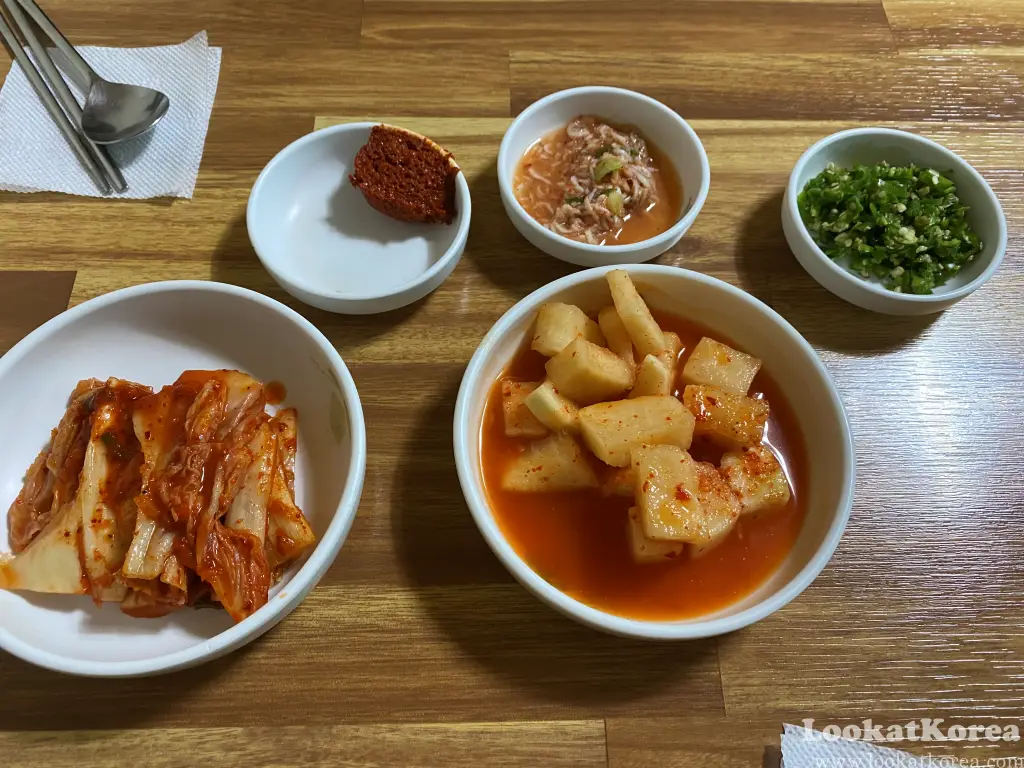
Most sundaeguk restaurants serve almost the same set of side dishes: dadaegi (spicy seasoning paste), saeujeot (salted fermented shrimp), chopped cheongyang chili peppers, napa cabbage kimchi and kkakdugi (cubed radish kimchi).
The dadaegi, saeujeot, kimchi and kkakdugi differ from place to place. Dadaegi is basically each restaurant’s secret sauce. Some places serve plain saeujeot, while others serve seasoned saeujeot.
The kimchi and kkakdugi are really important. Kkakdugi in particular is usually served with plenty of juice. If the kkakdugi is good, I also recommend putting some of it into your sundaeguk.
When your sundaeguk arrives, taste the broth first before adding rice. Season it with saeujeot, keeping in mind that you’ll add rice later. Once you add rice, the starch changes the taste of the broth, so if you really like the broth at first taste, I recommend eating it without rice for a while.
Put a piece of sundae or offal on your spoon and top it with one or two shrimp from the saeujeot. It tastes great that way. After you’ve eaten some of the sundae and offal, add the rice to the soup. (This is personal preference. You can also put the rice in from the start.)
Why Sundaeguk Is Korean Soul Food
As I mentioned above, the weaknesses of old-style sundaeguk have mostly been fixed, and one bowl makes a very filling meal. Prices vary by area, but for about 10,000 to 13,000 won (as of 2026), you can eat until you’re full and warm, and it goes perfectly with a bottle of soju.
The reason I say it goes well with soju is that the amount of sundae and offal is just right as anju (food eaten with drinks). Then you finish with rice in the broth. It doesn’t get better than that.
If you like Korean food, I recommend trying sundaeguk at least once. It’s cheap and filling. You don’t need to order the side menu items at a sundaeguk restaurant, because the portion is big enough on its own. Look for a good sundaeguk place near you.
Read next
- Sundae – Korean Blood Sausage: Chapssal-sundae vs Traditional Sundae
- Jojeomrye Nammun Pisundae: My Go-To Pisundae Spot in Jeonju
- 10 Korean Winter Street Foods You Must Try (From Bungeoppang to Hotteok)
If you found this helpful, feel free to share it. If you quote or use any part of it, please credit Look at Korea with a link to this post.