Winter in Korea is cold. In Seoul, January temperatures often drop below -10°C (14°F). Perhaps that is why, when winter arrives, street stalls selling warm snacks pop up all over the city. Lining up in front of a stall wrapped in white steam, warming your hands while you eat, is a scene you will only find in a Korean winter.
In this guide, I have put together 10 Korean winter street foods you should try if you visit Korea in winter, along with where to find them and how much they cost.
1. Bungeoppang (Fish-Shaped Bread)

Bungeoppang is made by pouring batter into a fish-shaped mold, adding sweet red bean paste, and baking it until golden. The name means “carp bread,” but there is no fish in it at all. These days you will also often find custard cream, pizza, and sweet potato fillings.
It is true that there are fewer bungeoppang stalls than before, but the snack has been regaining popularity recently, so much so that Koreans now use the word “bung-se-gwon” (living near a bungeoppang stall) as a joke for a lucky neighborhood.
- Price: about 2,000–3,000 won for 3 pieces
- Tip: If you see a stall, buy some right away. There is no guarantee you will find another one around the next corner.
👉 Learn more: Bungeoppang
2. Hotteok (Sweet Syrup Pancake)
Hotteok is a sweet pancake made from chewy glutinous rice dough filled with brown sugar, cinnamon, and nuts, then pressed flat and fried in oil. The melted sugar inside is extremely hot, so be careful with your first bite. You can still find hotteok on the streets fairly easily, and in Busan, “ssiat hotteok” stuffed generously with seeds is especially famous.
- Price: 1,500–2,500 won each
👉 Learn more: Ssiat Hotteok – Busan’s Famous Seed-Filled Hotteok
3. Goguma (Roasted Sweet Potatoes)
Sweet potatoes slowly roasted in a drum-shaped oven are lightly charred on the outside and honey-sweet on the inside.
Unfortunately, roasted sweet potato stalls have become really hard to find on the street. Instead, some convenience stores roast sweet potatoes themselves and sell them in store. Even these tend to sell out quickly, so if you walk into a convenience store and smell roasted sweet potatoes, it is worth grabbing one.
4. Gunbam (Roasted Chestnuts)
In the past, many stalls sold roasted chestnuts together with roasted sweet potatoes, but these days they are hard to spot on the street. Every now and then, though, you may come across a mobile stall (a small truck) selling only roasted chestnuts, and they are easy to find at highway rest areas. The shells are scored, so they are easy to peel, and the taste is nutty and comforting.
- Price: from 5,000 won
5. Eomuk / Odeng (Fish Cake Skewers)
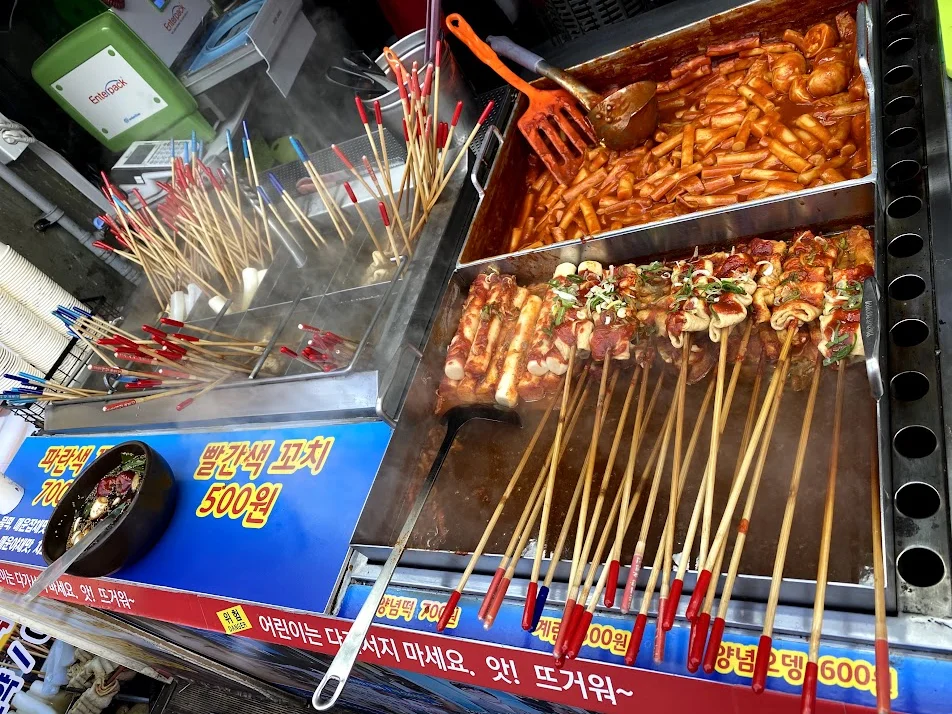
Eomuk is fish cake on skewers, simmered in a hot, savory broth. At most stalls you can scoop the broth into a paper cup for free. You simply pay for the number of skewers you ate.
- Price: 1,000–1,500 won per skewer
6. Gyeranppang (Egg Bread)
Gyeranppang is an oval-shaped bread baked with a whole egg on top. The combination of sweet bread and slightly salty egg works surprisingly well. You can easily find it on the streets of Myeongdong.
- Price: 2,000–3,000 won each
👉 Learn more: Gyeran Ppang
7. Jjinppang & Hoppang (Steamed Buns)

Jjinppang is a soft, fluffy steamed bun filled with red bean paste. It is no longer easy to find at street stalls; these days you usually buy it at shops that sell both mandu (dumplings) and jjinppang. These shops steam their dumplings and buns right at the storefront, so there is a lot of steam. If you see a shop with white steam billowing out in front, there is a good chance you will find jjinppang there.
Every winter, convenience stores also bring out their “hoppang” steamers. Besides red bean, you can find vegetable, pizza, and curry flavors.
- Price: 1,000–2,000 won each
👉 Learn more: Jjinppang
8. Tteokbokki, Twigim & Sundae

Tteokbokki is the leader of Korean street food, together with sundae (Korean blood sausage) and twigim (fried snacks), and it is popular all year round. In the cold winter, it is great to warm up with fish cake broth and make a full meal out of tteokbokki, twigim, and sundae. Try dipping the twigim or sundae into the sweet and spicy tteokbokki sauce.
👉 Learn more: Tteokbokki, Twigim, Sundae
9. Gukhwappang (Chrysanthemum Bread)
As the name suggests, gukhwappang is baked in a chrysanthemum flower-shaped mold. The petal pattern is clearly stamped on each piece, making it cute to look at. It is bite-sized, smaller than bungeoppang, so it is great for buying by the bag and sharing. The filling is usually red bean paste.
- Price: about 2,000–3,000 won per bag
10. Pulppang (Round Red Bean Cakes)
Pulppang looks similar to gukhwappang, but the shape is different. Pulppang has no flower pattern; it is baked into a round, plump shape. The outside is thin and slightly crispy, while the inside is filled with moist batter and sweet red bean paste. It has long been a favorite snack of ordinary people, so for many Koreans it is a food full of childhood memories.
- Price: about 2,000–3,000 won per bag
- Tip: Freshly baked ones are very hot inside, so let them cool down a little before eating.
Where to Find Winter Street Food in Korea
Street stalls have become harder to find than in the past. Government policies on hygiene and safety have greatly reduced their numbers, but they can still be found wherever people gather.
- Around subway stations: You will often see stalls catering to the after-work crowd.
- At the entrances and inside traditional markets: Local traditional markets are the best places to look for street food.
- Myeongdong: Because so many foreign travelers visit, this is the easiest place to try street food.
If you want to enjoy street food properly in Seoul, I recommend these three markets.
Gwangjang Market
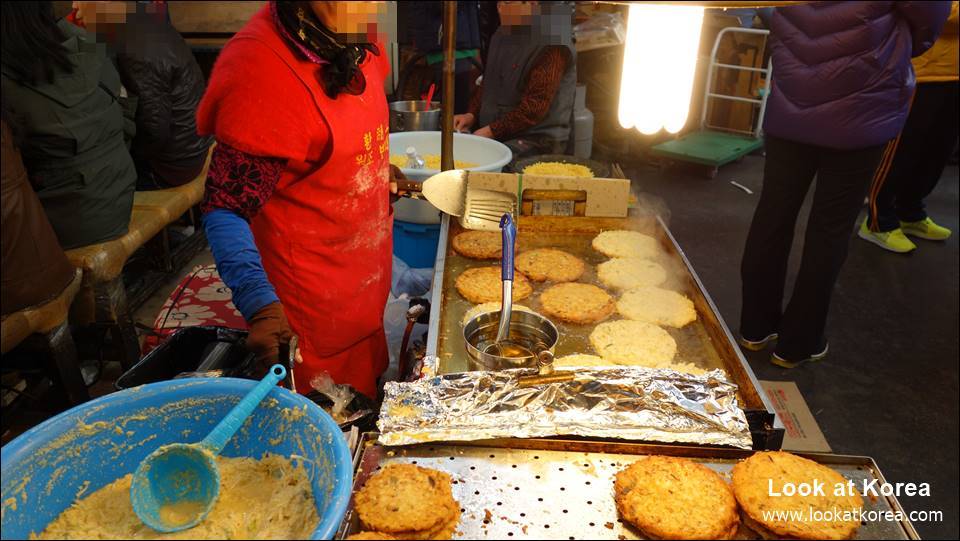
This is the most famous food market in Seoul. You can try a wide variety of street foods in one place, including bindaetteok (mung bean pancakes), mayak gimbap, tteokbokki, and sundae. Many foreign travelers visit, so even first-timers can look around comfortably.
👉 Learn more: Gwangjang Market
Namdaemun Market
One of the oldest and largest traditional markets in Korea, Namdaemun Market is close to Myeongdong, so it is easy to visit both together. There are many stalls selling hotteok, fish cakes, and dumplings, and every winter long lines form in front of the hotteok stalls.
Mangwon Market
Mangwon Market is a neighborhood market in Mapo-gu, Seoul, loved by locals. It has plenty of cheap and tasty snacks such as croquettes, dakgangjeong (sweet crispy fried chicken), and tteokbokki, making it a great place to enjoy street food while exploring the market. I recommend it if you want to experience the everyday market atmosphere of Seoul rather than a touristy one.
👉 Learn more: Mangwon Market
Good to Know
- Bring cash. More places accept cards these days, but many small stalls still only take cash or bank transfers.
- Simple Korean: Just knowing “Igeo hana juseyo” (One of this, please) is enough.
- Season: Most of these snacks appear from late November to February and disappear once the weather warms up.
Final Thoughts
Korean winters are cold, but a warm bag of bungeoppang in your hands can turn that cold into a special memory. If you visit Korea in winter, do not just walk past the steaming street stalls.
A Side Note: The Disappearing Pojangmacha
Street stalls have really decreased compared to the past. Pojangmacha (tented street bars), where you could once enjoy a cheap drink in the evening, are now hard to find, and even when you do find one, the prices are not what they used to be. If you enjoy Korean dramas, you may have noticed that scenes of people drinking at a pojangmacha have become much less common than before.
After the 1988 Seoul Olympics, many street stalls were removed, and since then local governments have continued to regulate them, so only a limited number remain today.
On cold winter evenings, stepping out of the subway station on the way home from work and stopping by a pojangmacha for a bowl of janchi guksu (warm noodle soup) to ease my hunger is something I sometimes miss.


