Cheomseongdae is one of the must-visit places when visiting Gyeongju, a city of Silla cultural heritage.
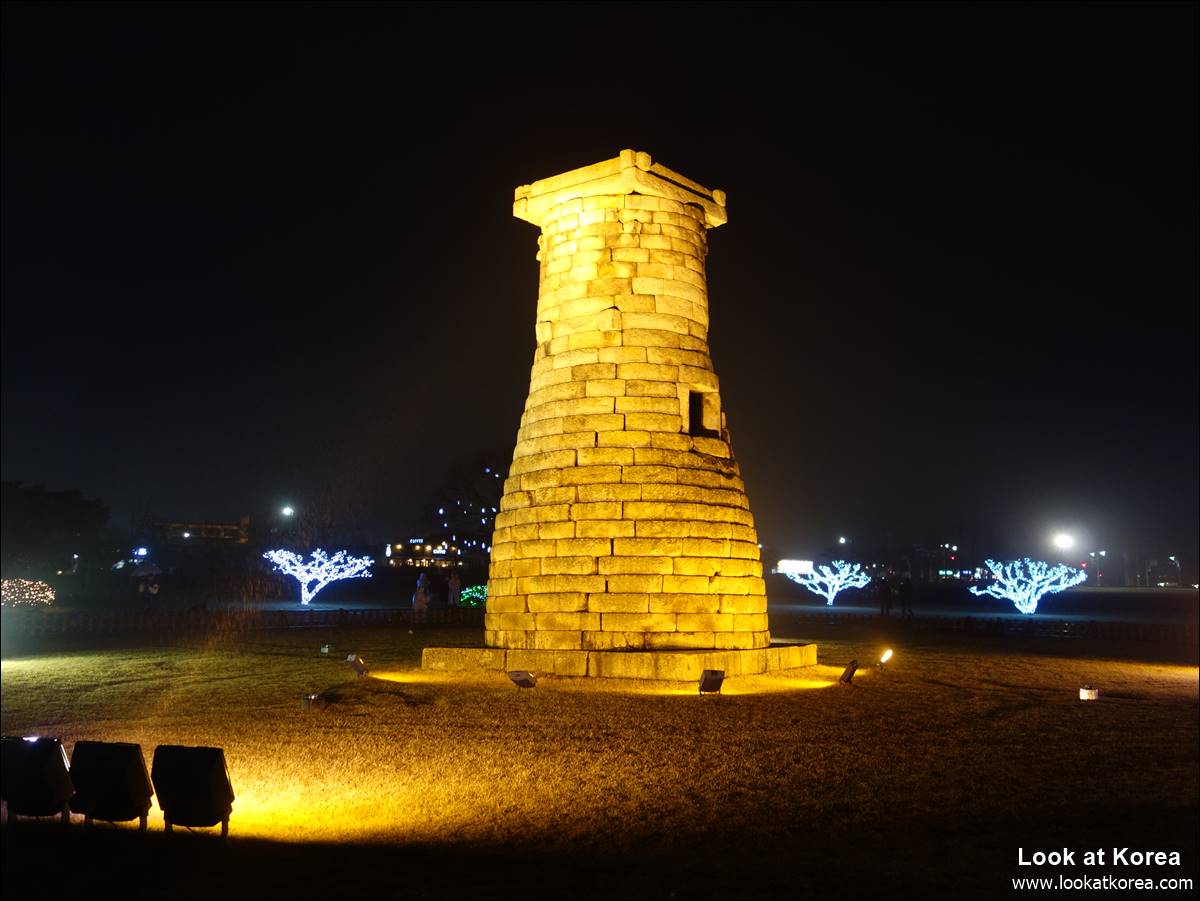
Even if historical heritage is not considered, the wonderful night view of Cheomseongdae is enough to captivate travelers.
About Cheomseongdae Observatory
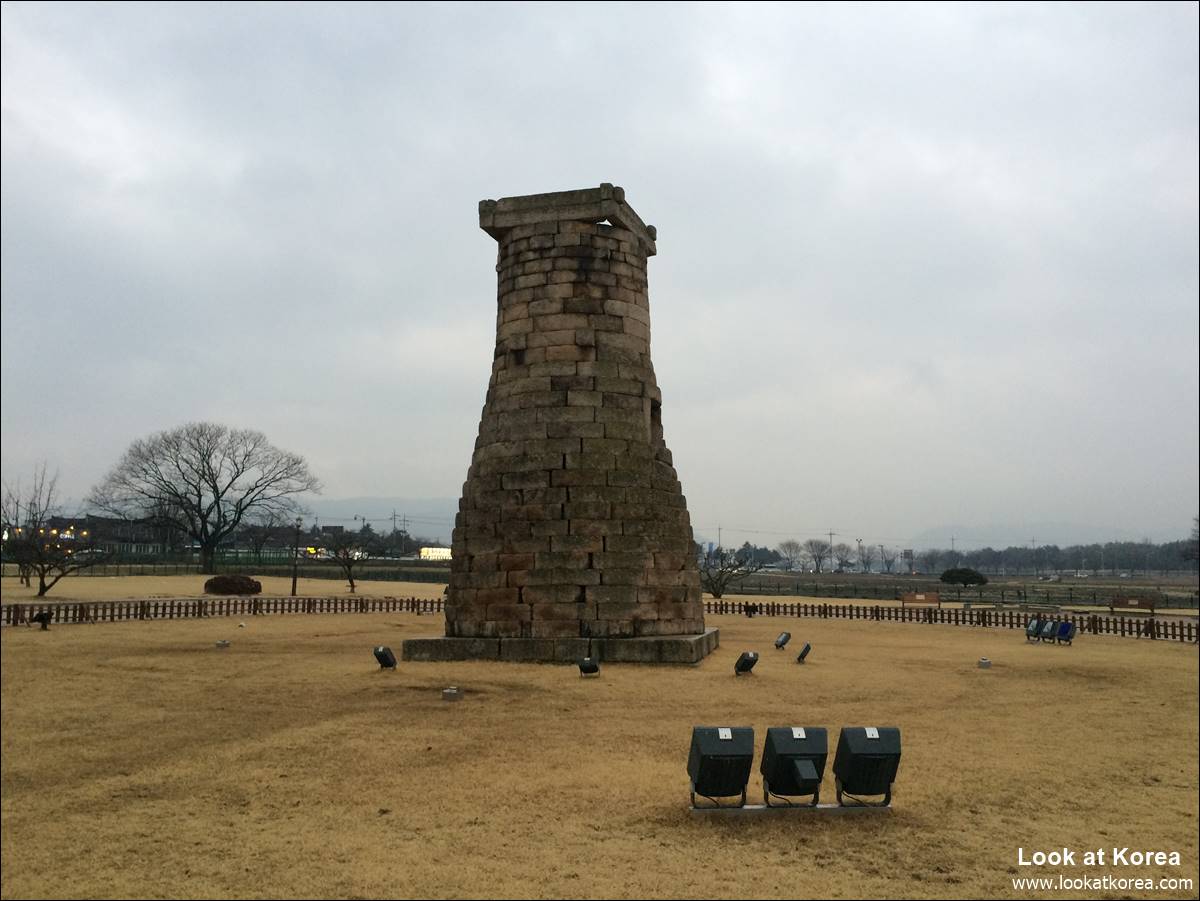
Cheomseongdae Observatory is thought to have been built during the reign of Queen Seondeok (r. 632-647) of the Silla Dynasty for observation of the movements of heavenly bodies.
It is the oldest astronomical observatory in Asia and is widely regarded as a precious cultural heritage that gives us a clear idea of the level of technological development of that time.Standing approximately 9 m in height, this observatory consists of a cylindrical body, a platform, and a square top. The cylindrical body includes 27 layers of fan-shaped stones, and the outer face is trimmed smooth whereas the interior wall face is not even.
At the upper part, long ends of stone material that is geared into inside part of hash shape are extended to the outside.
This arrangement can be seen in layers 19-20 and 25-26, and so it is assumed that a ladder was easily placed easy on those steps in the inside.
Around the southeast opening, the lower part is filled with rubble, while the upper part to the top is open and hollow.
The eastern half of the uppermost step is blocked with a stone slab. It is presumed that there might have been some devices for observation inside the observatory.The record of an ancient book states, “People can climb up through its middle.” It seems that one simply placed a ladder on its outside and climbed inside through a window, and then climbed up to the top via another ladder to observe the stars.
Cultural Heritage Administration
One researcher has suggested that the top might have been very convenient to sit, stand or lie on. During the ancient period, astronomy was deeply related to agriculture as farming times were often determined according to the movements of the stars.
It was also deeply related to politics in that the horoscope was considered to be important, since the good or bad fortune of a nation could be predicted according to the results of their observation of the stars.

Was It Really Used to Watch the Stars?
The story that it was used to see the stars has been gaining credibility.
However, it was pointed out that it was only 10m high from the ground and that the stars could be observed more easily when climbing the surrounding mountains, and the royal palace at a close distance was higher.
Therefore, it is argued that the structure would have been a kind of monument, altar, or warehouse.
However, it is now said again that this observatory did observe the stars after all.
In that era, there were no tall buildings, so a structure of this height was more than enough to see the stars clearly.
In other words, it was possible because there was no lighting at night like the present.
Finally, astronomy at this time is different from astronomy today.
At that time, its role was not to observe stars for scientific research, but to predict the national fortune.
The most important point of this observatory is that stars were observed in this era.
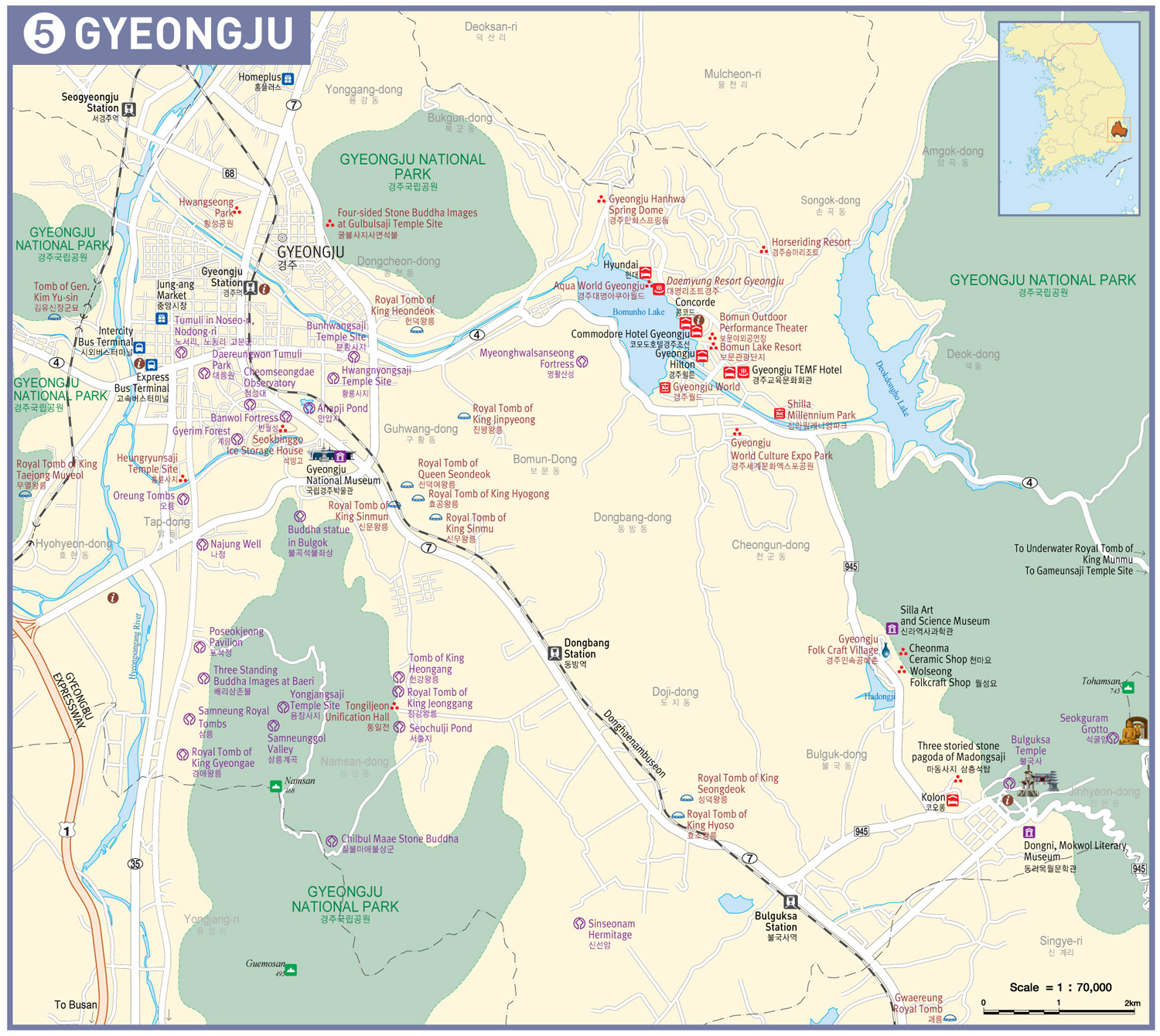
Cheomseongdae is near Hwangridan-gil, which is the most popular among young people in Gyeongju, so it is good to visit Hwangridan-gil and look around together.
The night view of Cheomseongdae Observatory and the night view of Donggung Palace and Wolji Pond are essential courses for Gyeongju travel.
I hope you visit both places at night.
One thing I noticed in person: Cheomseongdae sits in a spot you could easily drive right past without noticing. There’s no formal entrance or gate like you might expect at a major attraction — it’s simply a stone structure standing in an open, flat field, and visitors can walk right up close to it. The only boundary is a very low barrier running around the base, low enough that you could step over it if you wanted to, though in practice hardly anyone does.
It also looks quite different by day and by night, so if your schedule allows, I’d recommend visiting once in daylight and once after dark to see both sides of it.
Visitor Information
- Address: 140-25, Cheomseong-ro, Gyeongju-si, Gyeongsangbuk-do
- Admission Fee: Free
- Operating Hours
- Summer season: 09:00-22:00
- Winter season: 09:00-21:00
- Holidays: None (open year-round)
- Parking: Available
- Facilities: Restroom
- Inquiries: Gyeongju Station Tourist Information Center, +82-54-772-3843
- Tripadvisor’s Review of Cheomseongdae
- Gyeongju Tour from Busan By Klook