Samyang Foods is well known internationally for its Buldak ramen, but the company continues to compete with Nongshim in South Korea’s domestic ramen market.
One of the products Samyang Foods has introduced is Samyang 1963 Ramen, a premium ramen that highlights the company’s history and heritage.
The number 1963 refers to the year Samyang Foods launched South Korea’s first commercially produced instant ramen. By incorporating this historical milestone into its branding, Samyang 1963 distinguishes itself from the company’s original Samyang Ramen as a more premium product.
One of the most interesting features of this ramen is that beef tallow is used in the oil blend for frying the noodles.
This brings to mind the 1989 beef tallow controversy involving Samyang Foods. The reappearance of a ramen product made using beef tallow decades later makes Samyang 1963 particularly interesting from a historical perspective.
Personally, Samyang 1963 has become one of my favorite ramen products recently, so I’d like to share my experience with it.
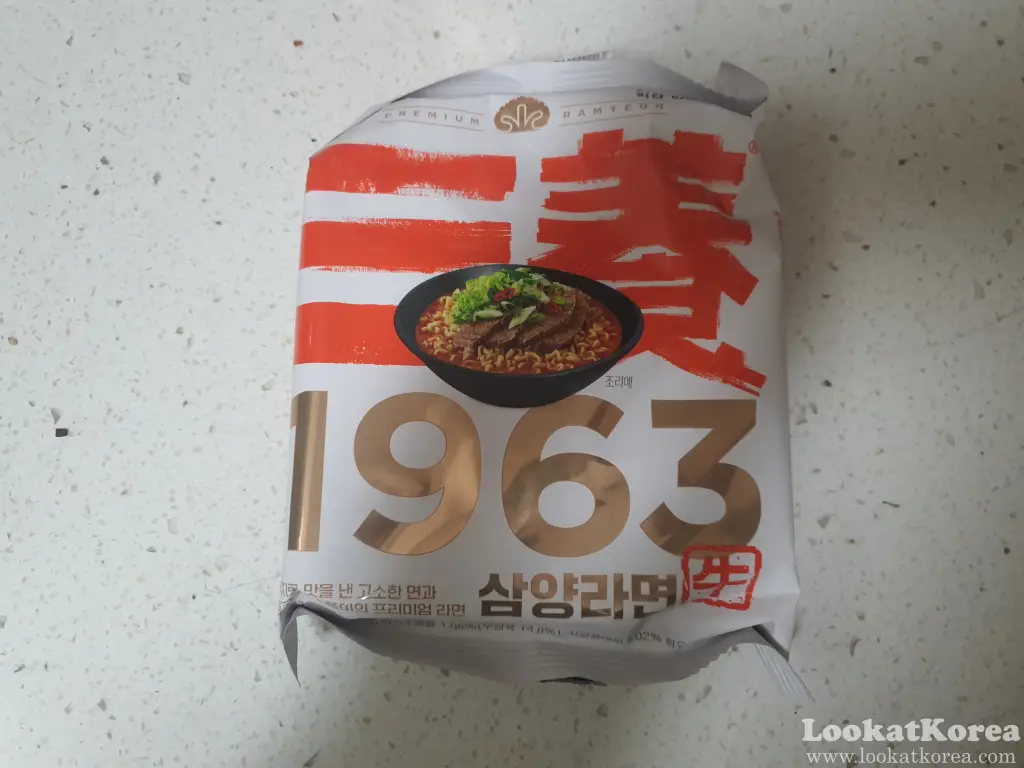
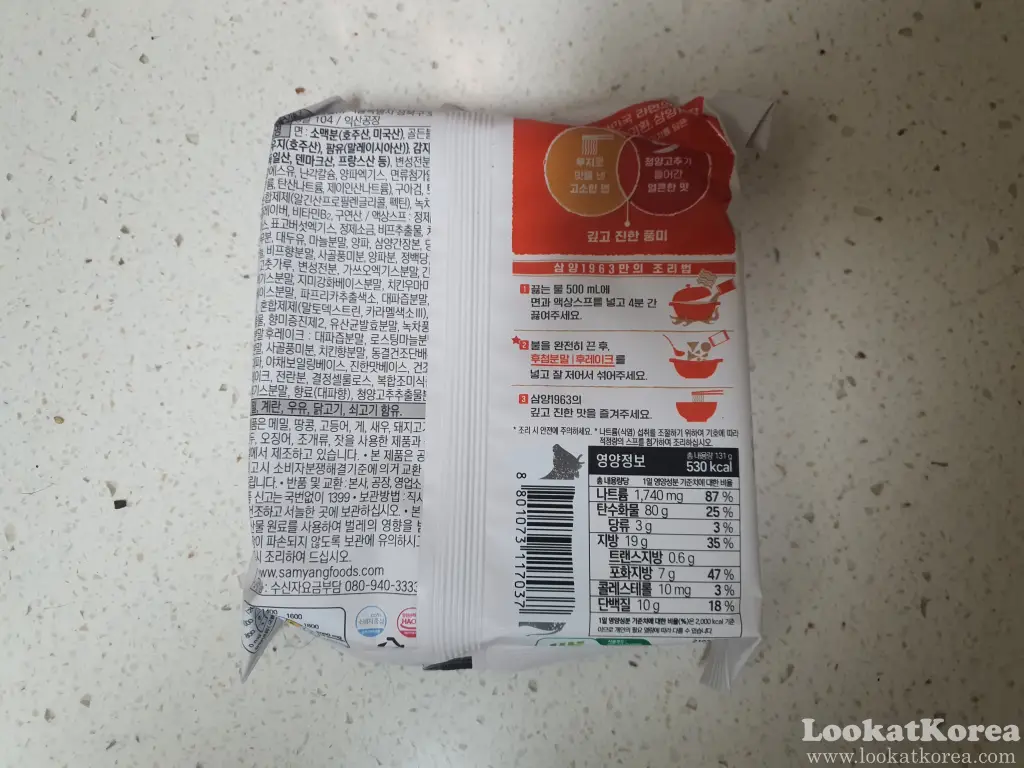
Packaging and Design
Samyang 1963 comes in white packaging featuring bold red Chinese characters and large gold-colored numbers spelling out 1963.
The design looks clean and premium, while the striking colors make the package stand out among other ramen products on store shelves.
By emphasizing the Samyang name and the year 1963, the packaging effectively communicates the product’s connection to the company’s history.
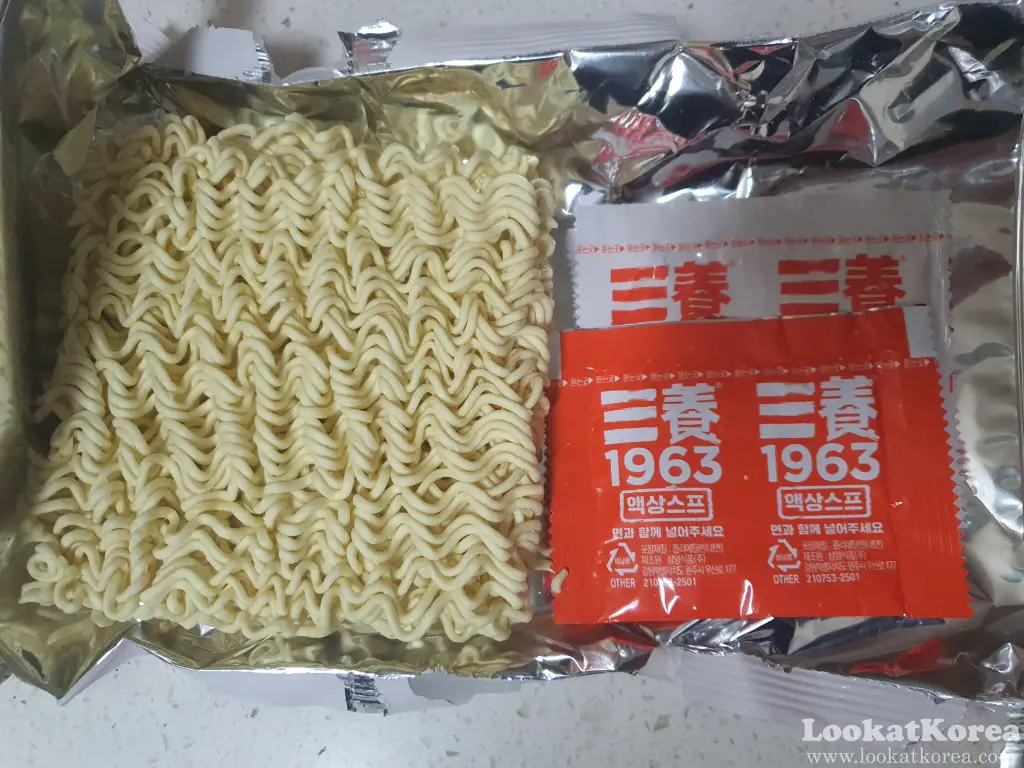
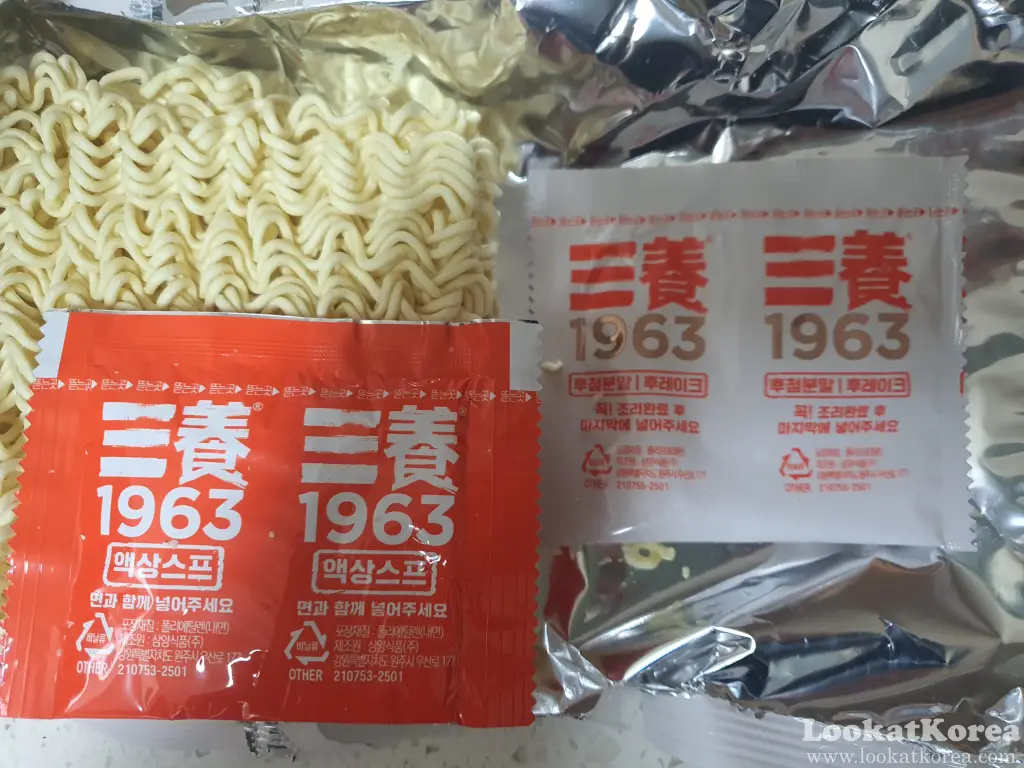
What’s Inside the Package?
Opening the package reveals a block of dried noodles and two types of seasoning packets.
One contains liquid seasoning, while the other contains powdered seasoning that is added after cooking.
The liquid seasoning gives the broth a spicy and refreshing flavor, while the powdered seasoning adds a rich, beef bone broth flavor.
One notable feature is the instruction to add the powdered seasoning only after the noodles have finished cooking.
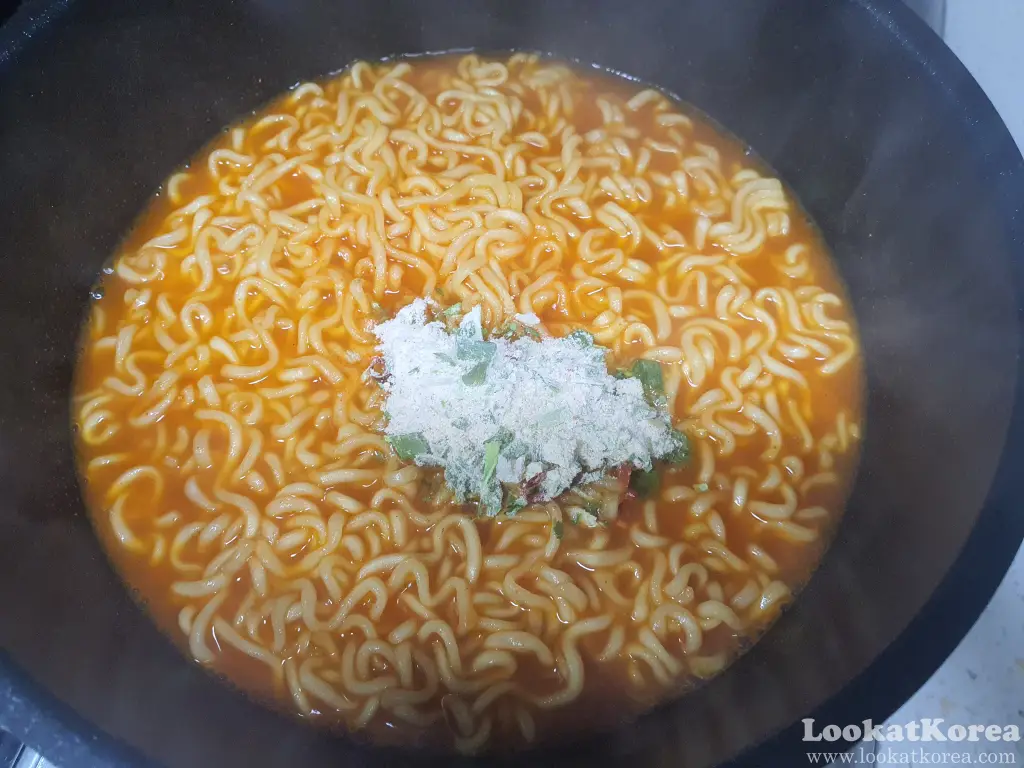
How to Cook Samyang 1963 Ramen
According to the cooking instructions printed on the package, the preparation process is simple.
- Bring 500 mL of water to a boil.
- Add the noodles and liquid seasoning.
- Boil for approximately four minutes.
- Turn off the heat and add the powdered seasoning.
- Stir well to combine the seasoning with the broth, and the ramen is ready to serve.
The most distinctive part of the cooking process is adding the powdered seasoning at the end rather than at the beginning.
Otherwise, preparing Samyang 1963 is straightforward and requires no special cooking skills.
Noodles Fried in a Blend of Beef Tallow and Palm Oil
One of the defining features of Samyang 1963 is the oil used to fry its noodles.
According to the product information, the noodles are fried in a blend of beef tallow and palm oil. Samyang Foods calls this its Gold Blend oil.
The use of beef tallow is one of the key features that distinguishes this product from many conventional instant ramen varieties.
Rather than focusing solely on the broth, Samyang 1963 also emphasizes the flavor and character of the noodles themselves.
How Does Samyang 1963 Ramen Taste?
My favorite aspect of Samyang 1963 is its broth.
The liquid seasoning gives it a spicy yet refreshing taste, while the powdered seasoning adds a rich beef bone broth flavor.
I usually like adding an egg when cooking instant ramen. However, with Samyang 1963, I prefer to enjoy the broth as it is, without adding an egg.
Adding an egg changes both the flavor and texture of ramen broth. With this product, I personally find it more enjoyable to experience the original flavor without any additional ingredients.
Of course, taste is subjective, and everyone has different preferences. For me, Samyang 1963 is one of the most satisfying ramen products I have tried recently.
Is Samyang 1963 Available Overseas?
Samyang Foods has built considerable international recognition through Buldak ramen. However, Samyang 1963 takes a different approach.
Rather than focusing primarily on intense spiciness, it emphasizes the flavor of noodles fried in a beef tallow and palm oil blend, together with the richness of beef bone broth.
According to my review of Samyang Foods’ official websites, the Korean-language website provides detailed information about Samyang 1963. However, I had difficulty finding information about this product on the English-language website.
This does not necessarily mean the product is unavailable overseas, as distribution can vary from country to country.
Personally, I hope Samyang 1963 will become available in more international markets.
Samyang Foods has already achieved worldwide recognition with Buldak ramen. I’m curious to see how international consumers will respond to this premium ramen, which offers a different experience from the company’s famous spicy noodles.