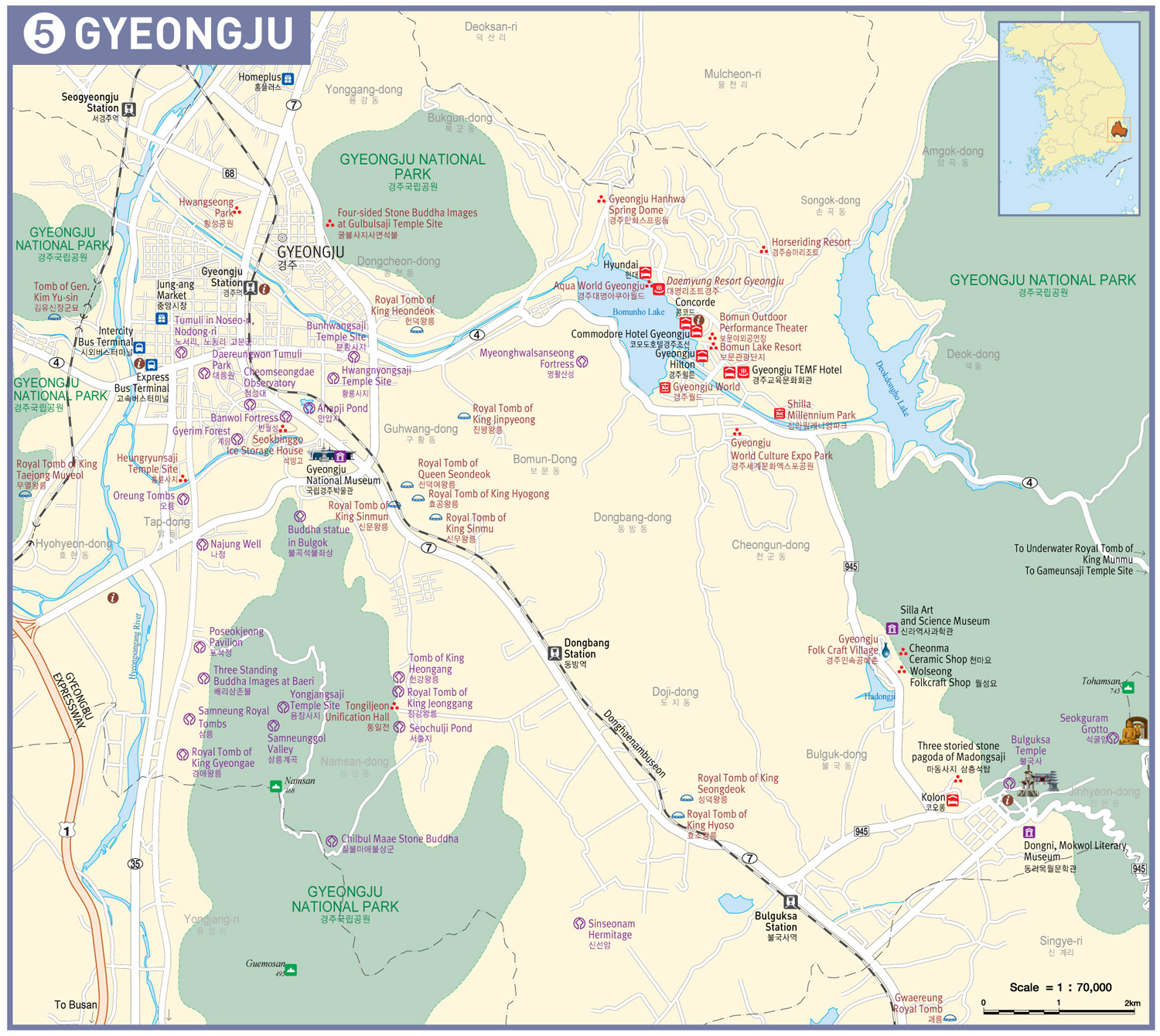
Donggung Palace and Wolji Pond is the remains of the palace during the Unified Silla Kingdom period, located in Gyeongju.
Donggung refers to the annex where the crown prince of Silla lived, while Wolji refers to the artificial pond built beside it.
The site was originally called Anapji, before later being renamed to its current title.
In Korea, it is called Donggung and Wolji.
Donggung includes the meaning of a palace, and Wolji includes the meaning of a pond.
It seems that palaces and ponds have been added for foreigners while translating into English.
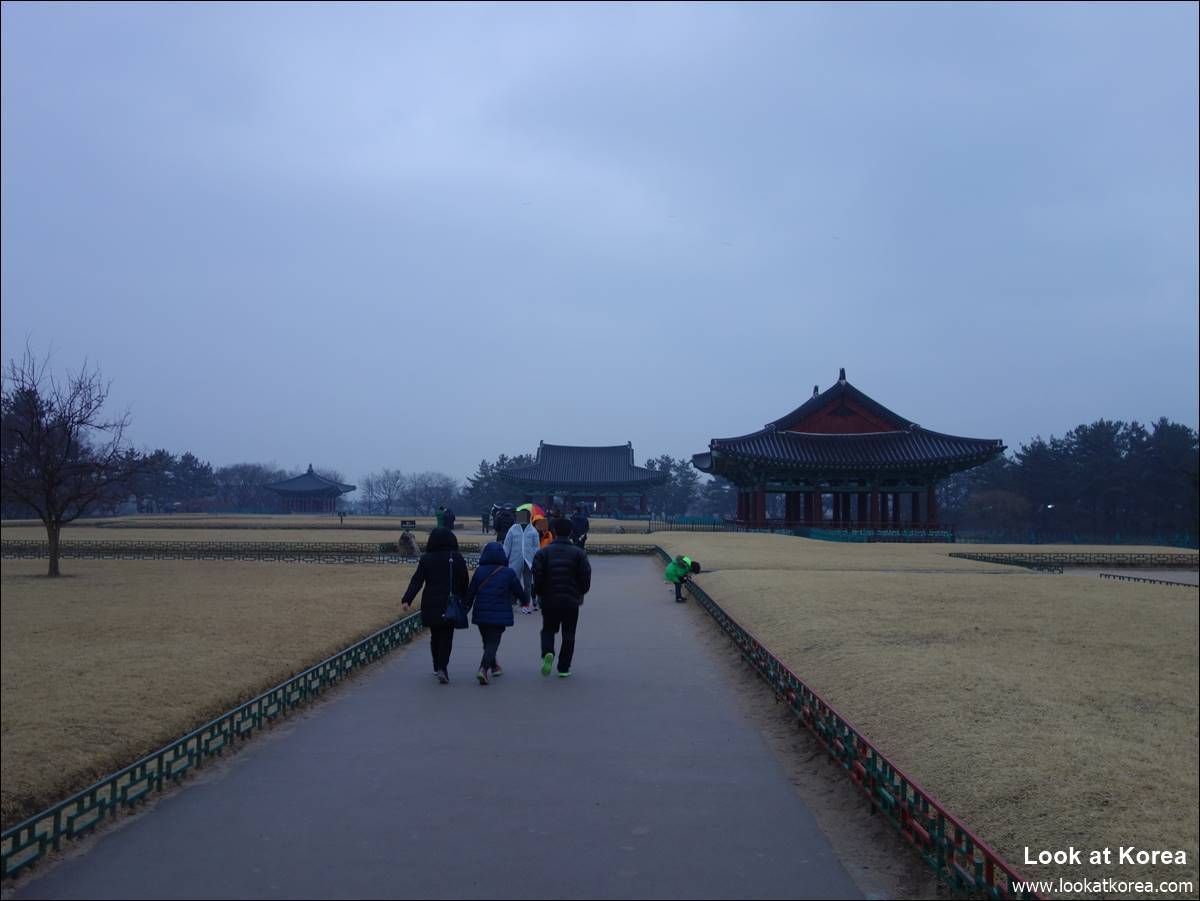
People begin to flock just before sunset.
It is an essential course in Gyeongju — nearly every Korean visitor makes a point of coming here for the night view.
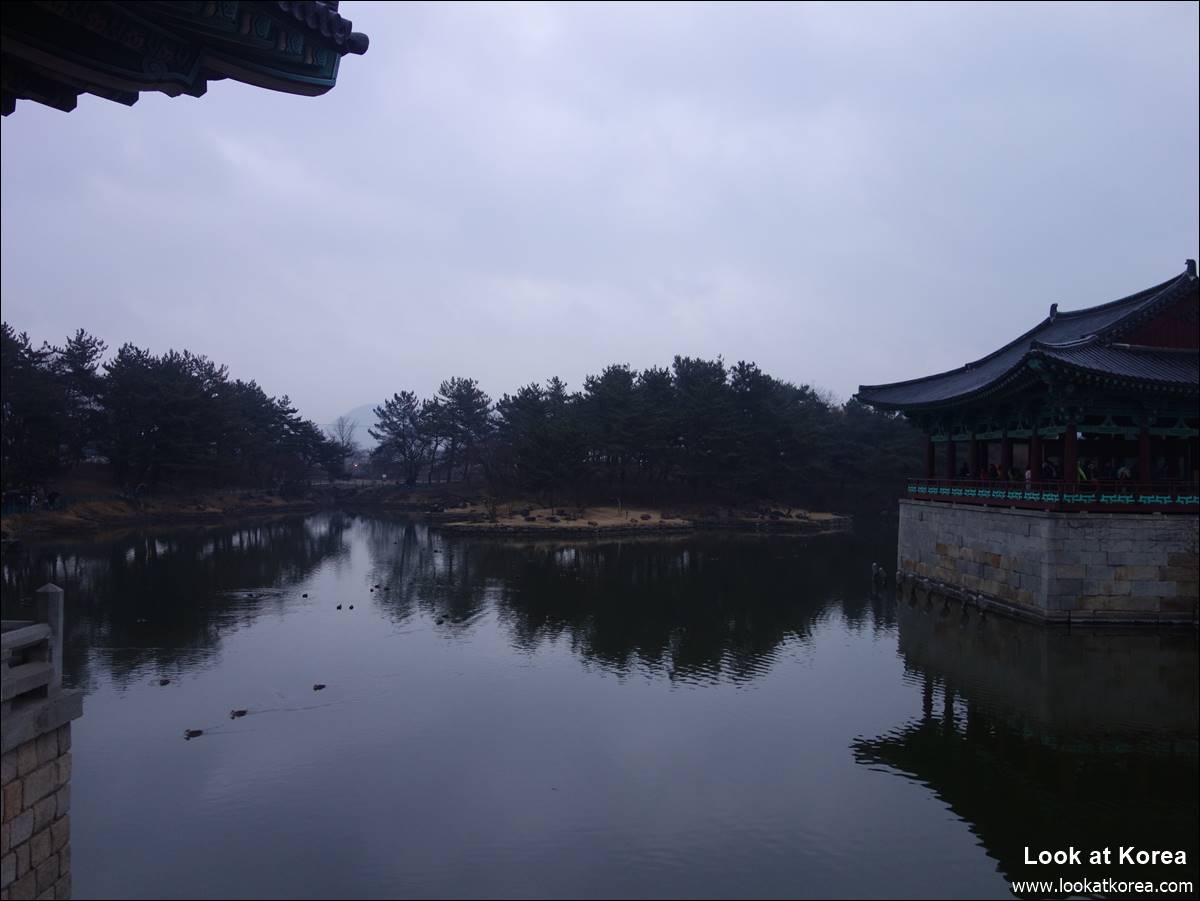
It’s getting dark.

The opposite side, people are already waiting in a good place where you can see the night view at night.
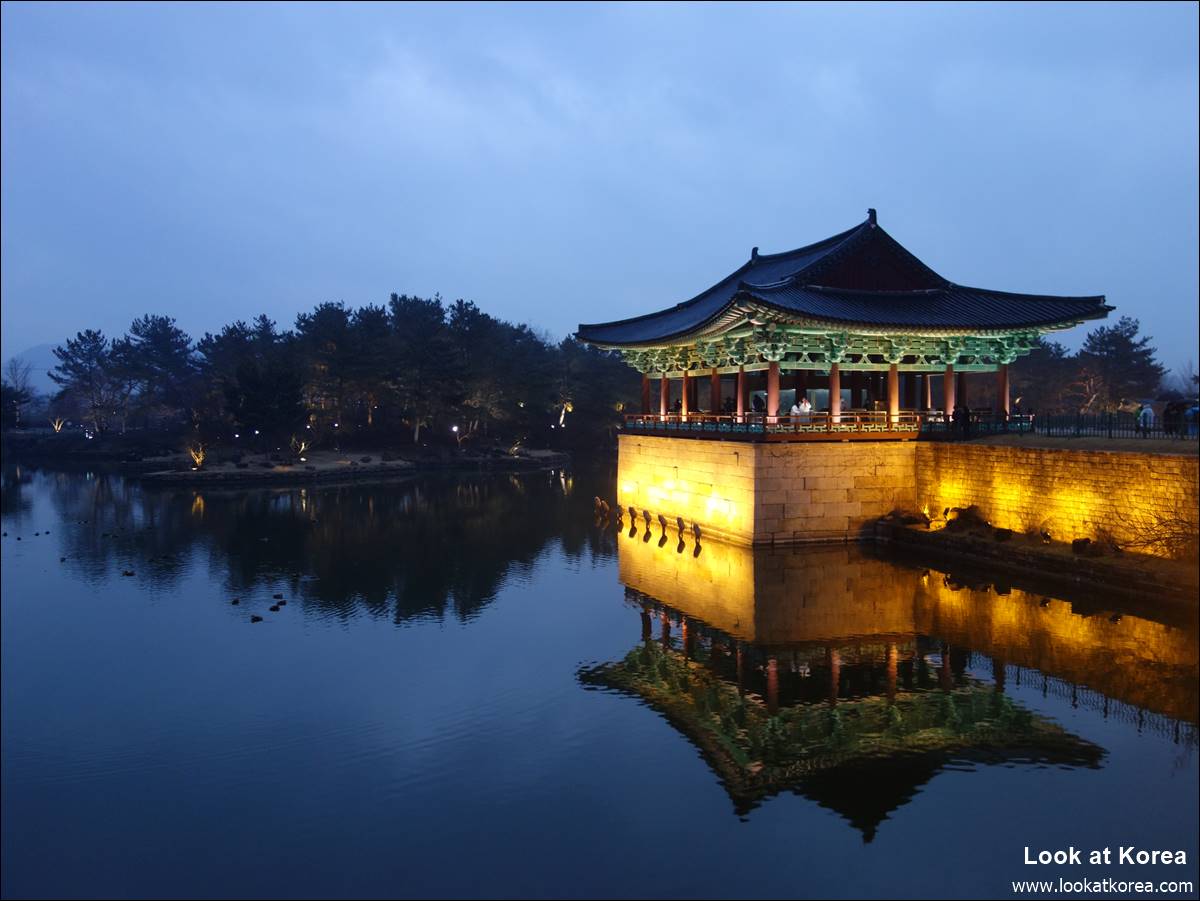
You can see a truly beautiful night view as the lights come on across the pond and the old palace grounds.
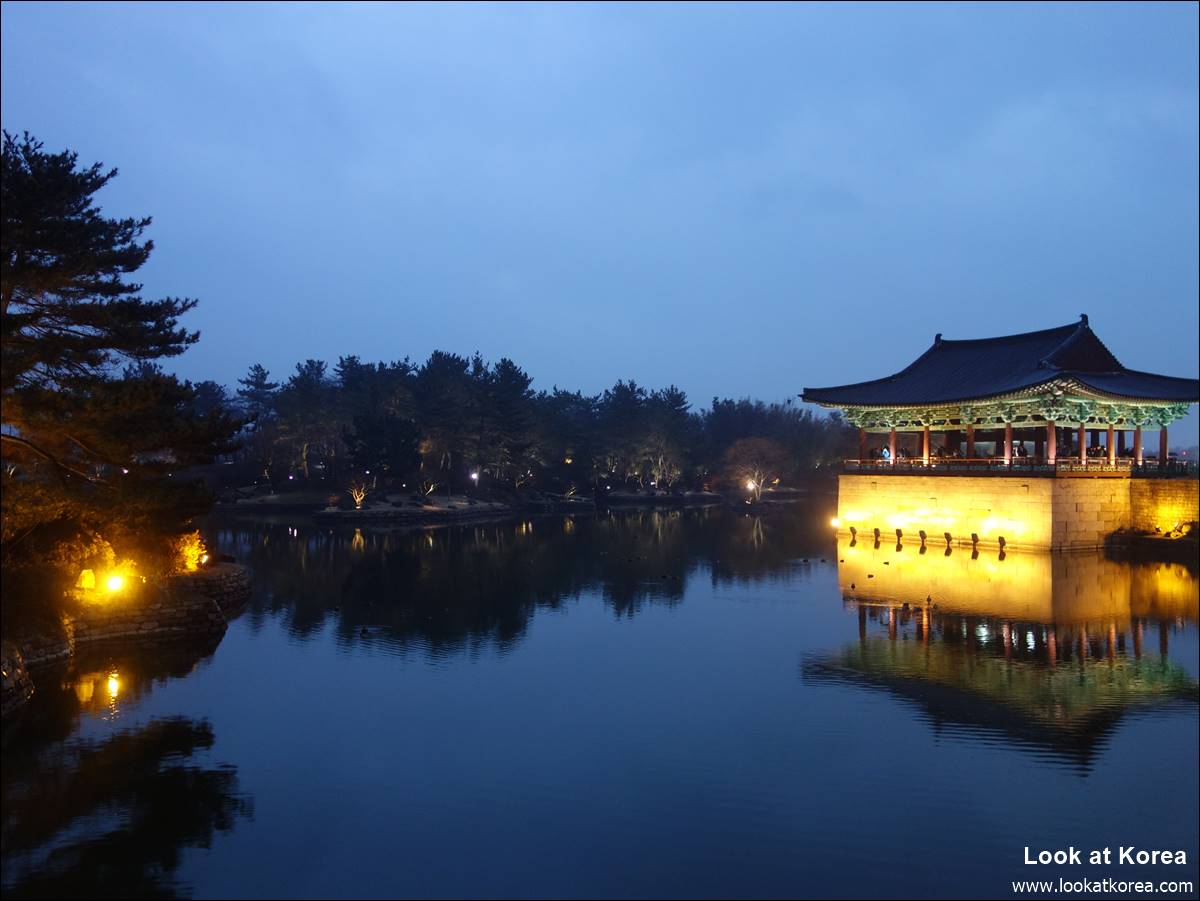
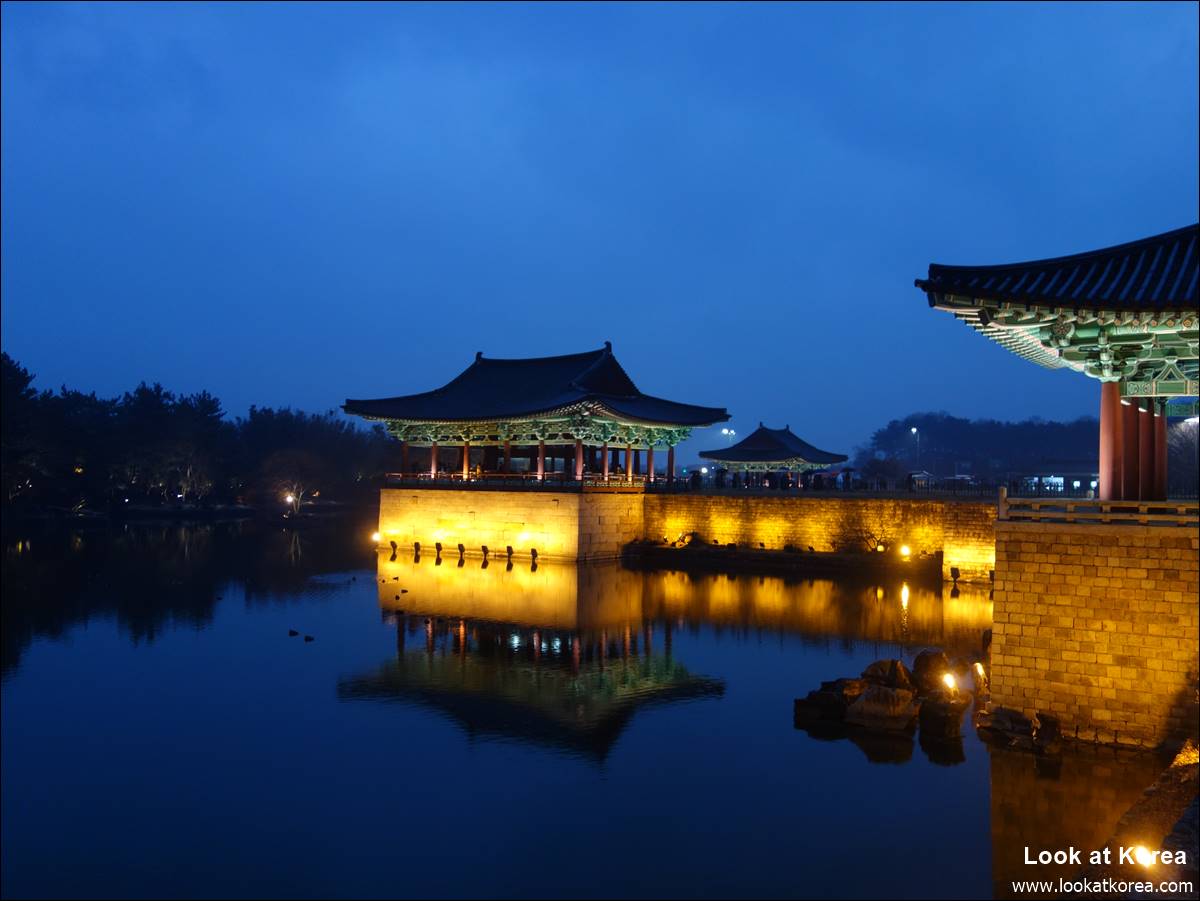
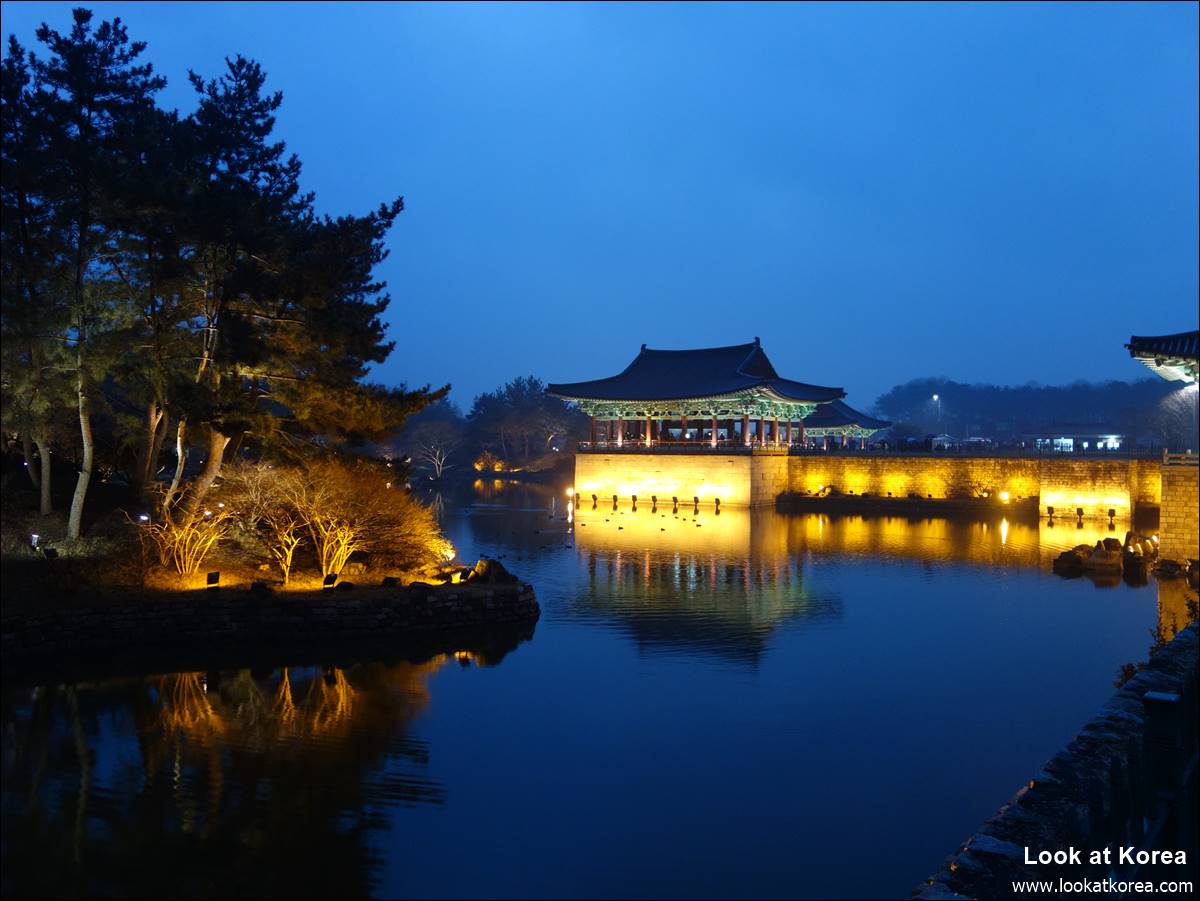
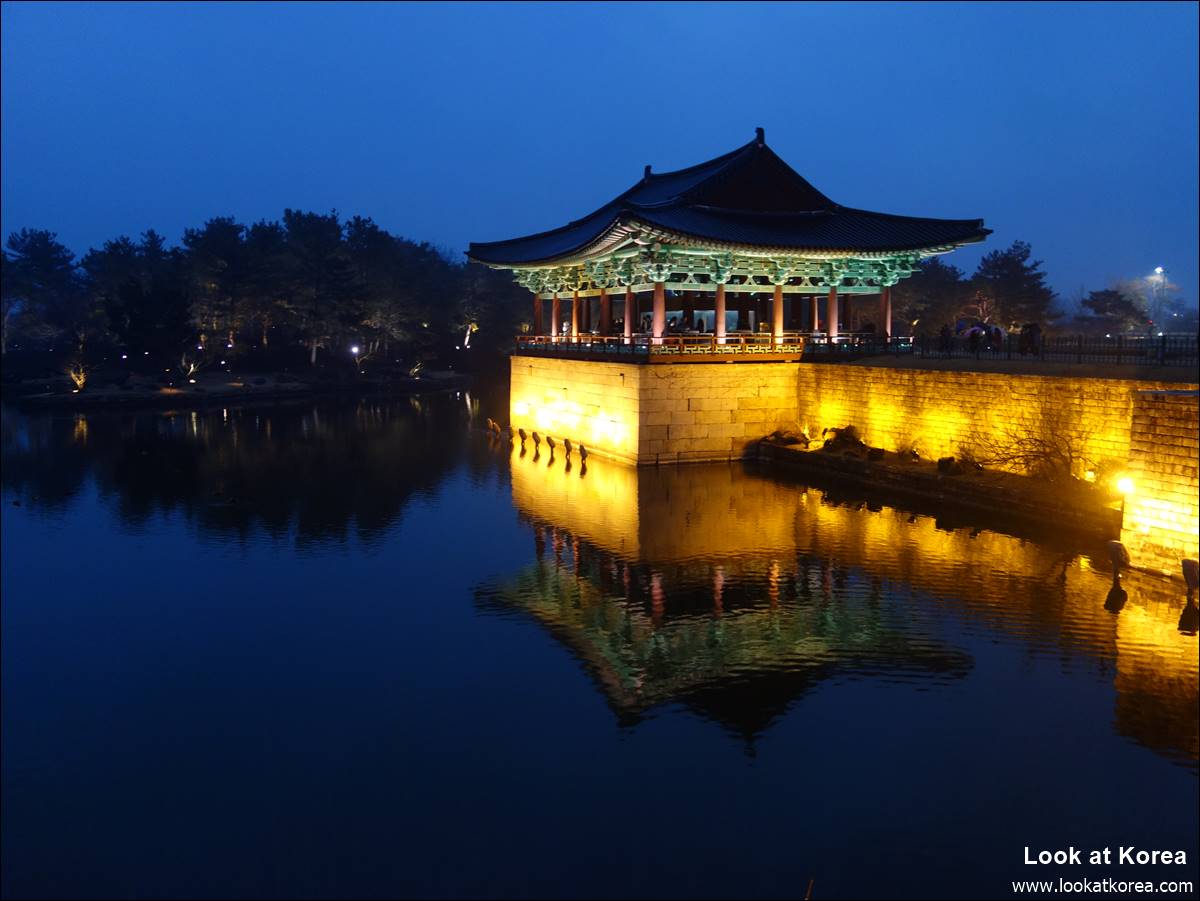
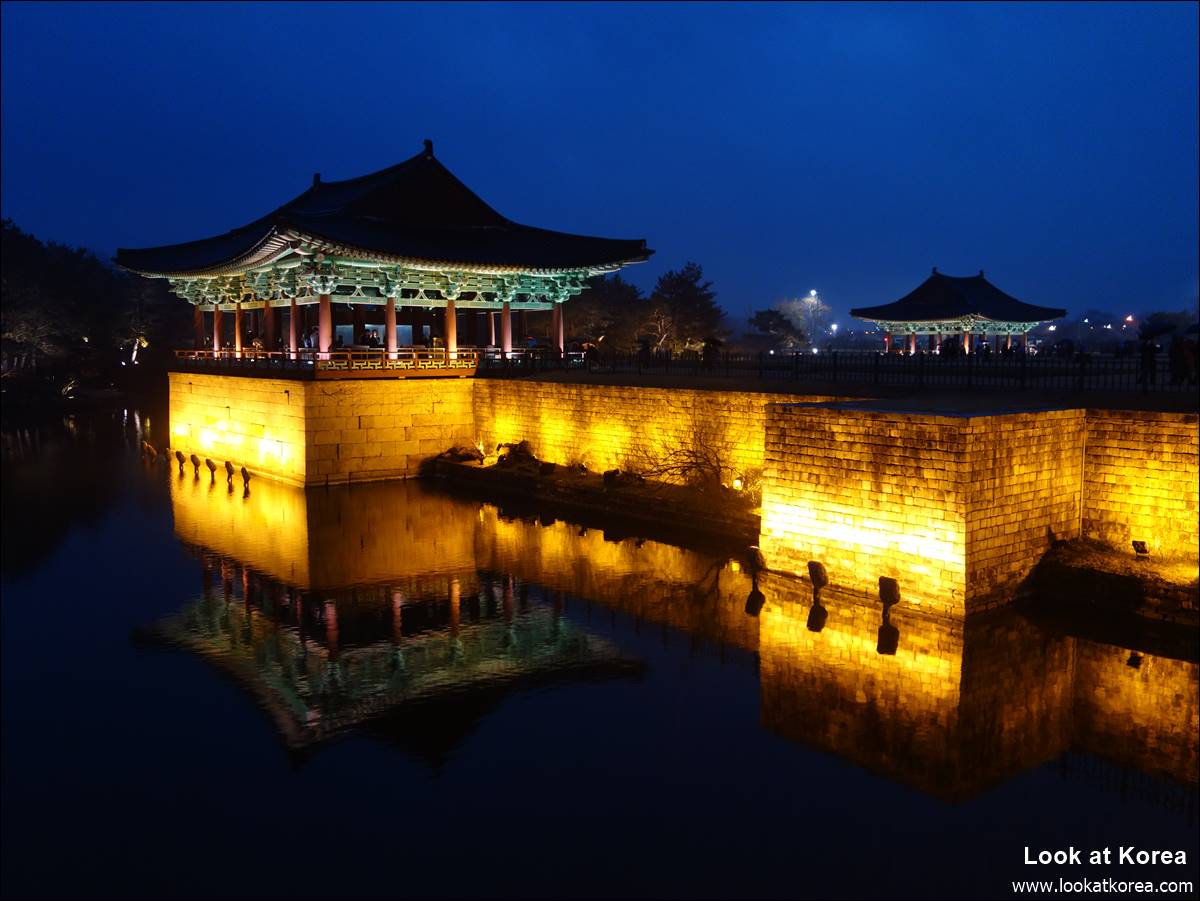
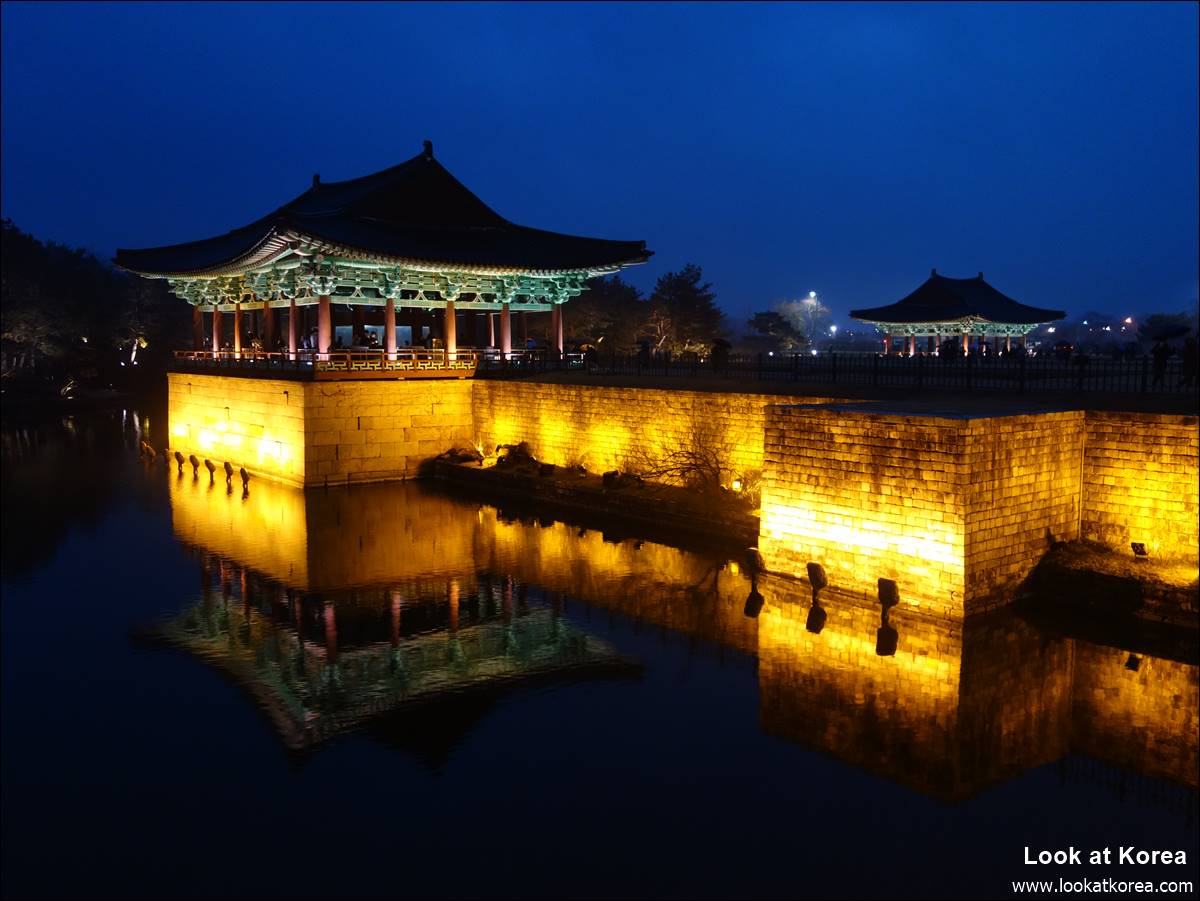
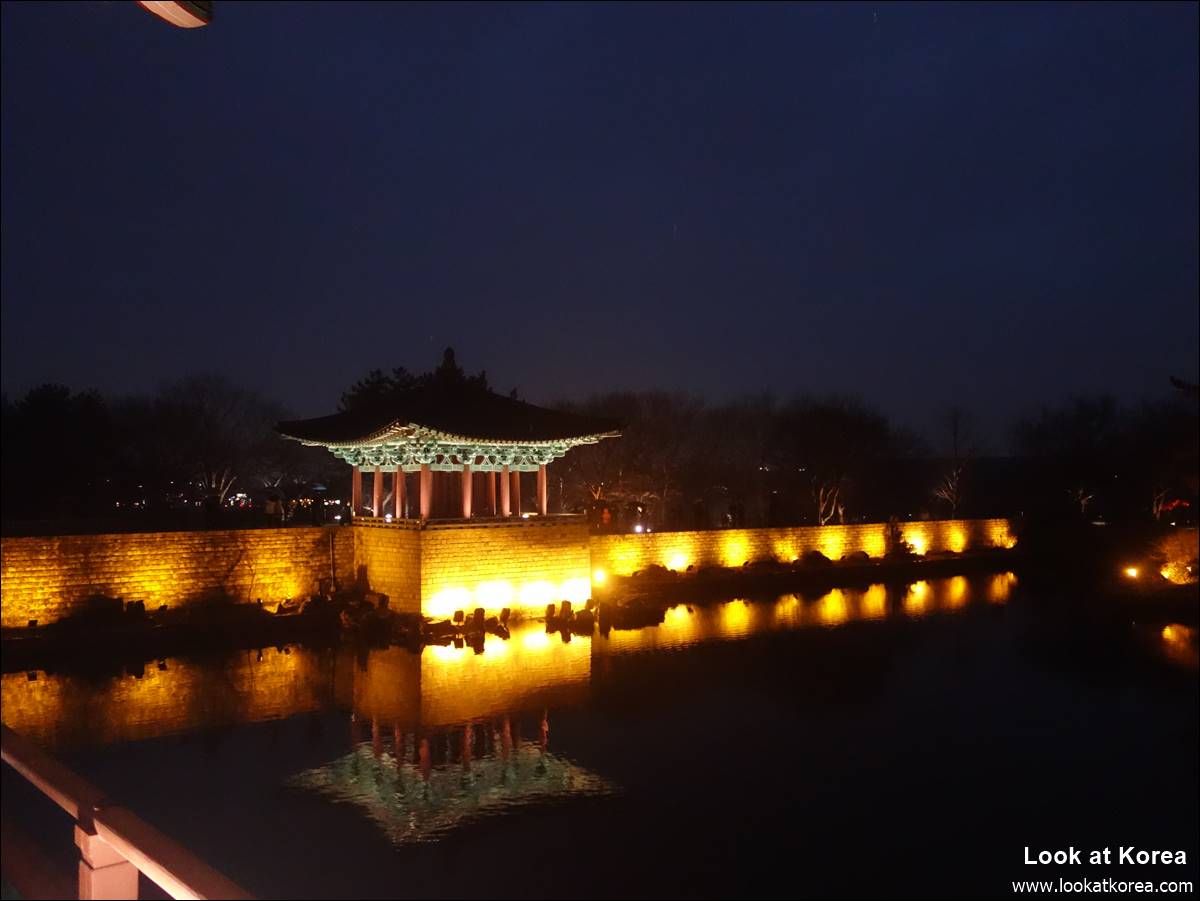
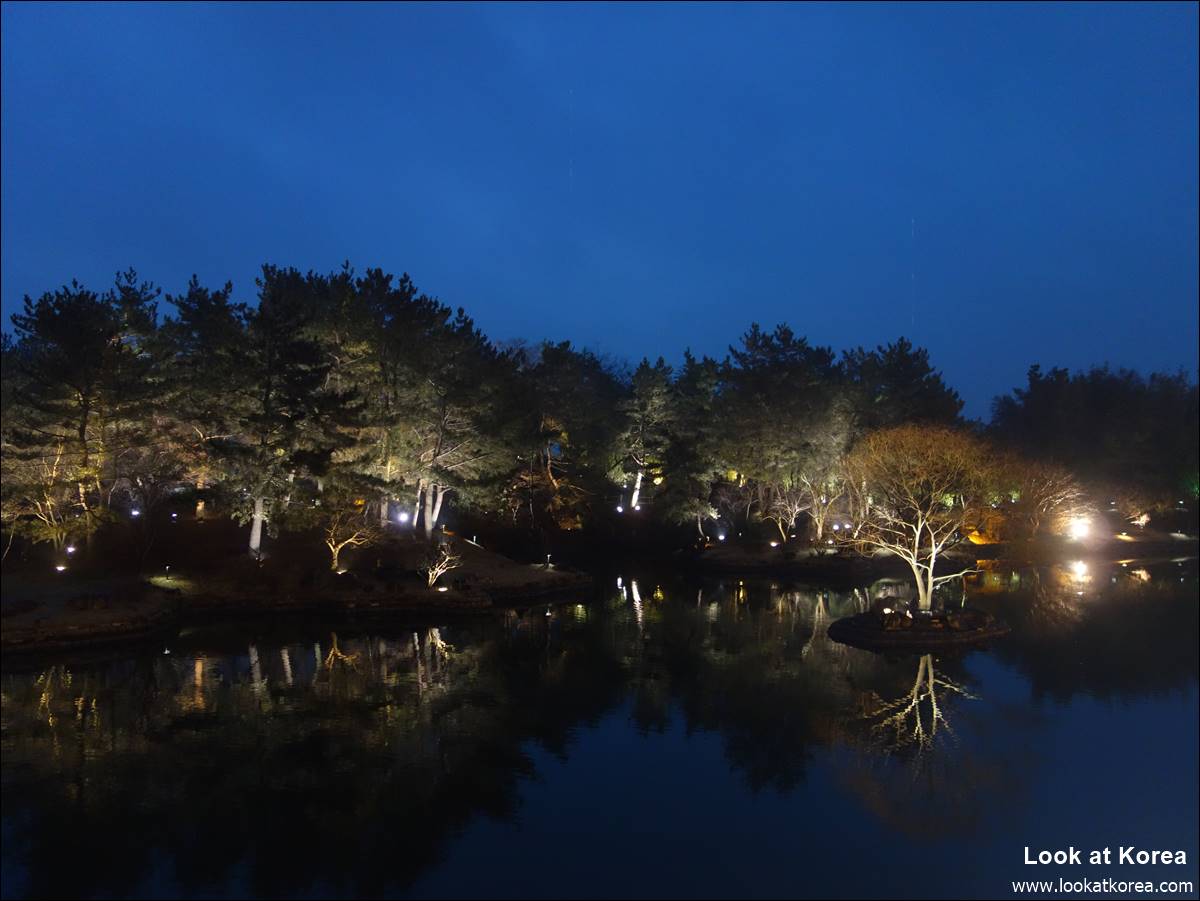
About Donggung Palace and Wolji Pond
Located on the west part of Anapji Pond, this is the Imhaejeon Palace Site of the Silla Period. Anapji Pond was built in 674 during the 14th year of the reign of King Munmu after the unification of the Korean Peninsula. It has three central islands, and to the north and east are 12 hills — a composition reflecting the Taoist philosophy. Beautiful trees and flowers as well as rare birds and animals were brought from all over to these islands and hills. A number of pavilions, including Imhaejeon, were constructed around the lake and used for state festivals and banquets and as a prince’s palace. Anapji is an excellent example of garden and lake construction of that period. The reconstruction of the present lake and archaeological construction sites was undertaken during the period 1975-76 and completed in 1980. The original water conduit, drainage channel, and stone embankments were excavated and restored accordingly. A total of 26 building foundations and many relics were excavated from this site, including bowls, plates, and flower-patterned bricks where “The Second Year of Joro (680)” was inscribed. This was also the place where King Gyeongsun, the last monarch of Silla, hosted for Wang Geon, founder of the Goryeo Dynasty, a banquet to ask for his aid.
From Cultural Heritage Administration

You can also see a miniature model showing the site’s original layout.
Visitor Information
- Address: 102 Wonhwa-ro, Gyeongju, Gyeongsangbuk-do
- Admission Fee
- Adult: 3,000 KRW
- Teenager: 2,000 KRW
- Children: 1,000 KRW
- Operating Hours: 09:00-22:00 (last entry by 21:30)
Donggung Palace and Wolji Pond is an essential stop on any trip to Gyeongju.
Along with Cheomseongdae Observatory, it’s best visited at night, when the lights truly bring the old Silla capital to life.
Don’t miss this beautifully illuminated corner of Korea’s ancient palace grounds.